









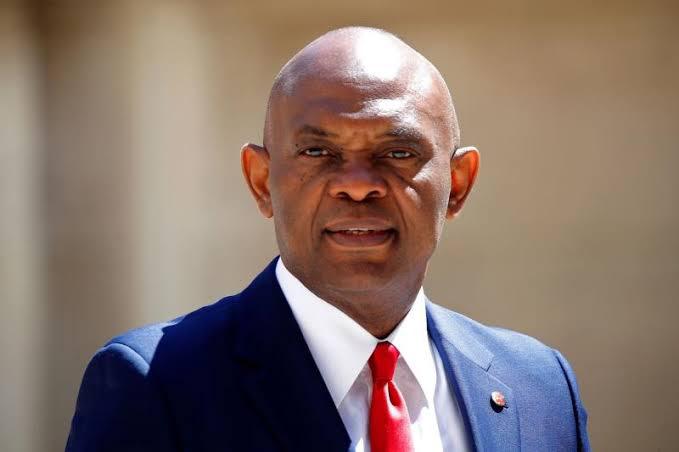






The Chief Executive Officer of the Nigerian Midstream and Downstream Petroleum Regulatory Authority (NMDPRA), Farouk Ahmed, has attributed the recent slump in global crude oil prices to the renewed wave of aggressive tariff policies rolled out by U.S. President Donald Trump.
Speaking at a presidential media briefing in Abuja on Tuesday afternoon, Ahmed warned that Trump’s protectionist trade policies are fueling uncertainty in international oil markets, driving volatility and dampening investor confidence.
“The global oil market today is reacting sharply to the erratic tariffing policies of the new American government,” Ahmed said.
“These tariffs are not only aimed at China but are sweeping across multiple countries and regions.
“They are unsettling the balance of demand and supply, particularly in the energy sector.”
Ahmed noted that the unpredictability surrounding the U.S. government’s economic direction is forcing investors and traders into short-term, high-risk decisions.
The NMDPRA boss explained that many oil traders are now operating on a “daily strategy,” buying and selling within 24 hours due to fears of sudden policy swings from Washington.
“We are seeing traders close out by the end of each day because they’re unsure what tomorrow’s news from the U.S. will bring,” he said. “This isn’t healthy for the global market.”
Ahmed also raised concerns that the Trump administration’s energy posture appears to favor lower crude oil prices – possibly below the $50-per-barrel mark – through a combination of aggressive domestic drilling and strategic manipulation of global supply lines.
“There is clearly a policy direction from the U.S. President to push crude oil prices down,” he said.
This development poses significant risks for oil-dependent economies like Nigeria, which relies heavily on crude exports for revenue and foreign exchange inflows.
The 2025 budget was benchmarked on a projected oil price of $74 per barrel, meaning the country could face revenue shortfalls if prices drop significantly below that mark.
In a positive development, Nigeria’s petrol imports have drastically decreased, with local supply surging by 670% since August 2024.
Local plants delivered 26.2 million liters per day in early April, a significant jump from the 3.4 million liters recorded in September.
However, combined supply has only crossed the government’s 50 million liters per day consumption benchmark twice in the eight-month window.
“The volatility we’re seeing today is not just market-driven – it’s policy-driven, coming from one of the world’s most influential economies,” Ahmed warned. “And for countries like Nigeria, that’s a serious concern.”
He called for greater coordination among global powers to avoid actions that may destabilize energy markets.
Author











Leave a comment