











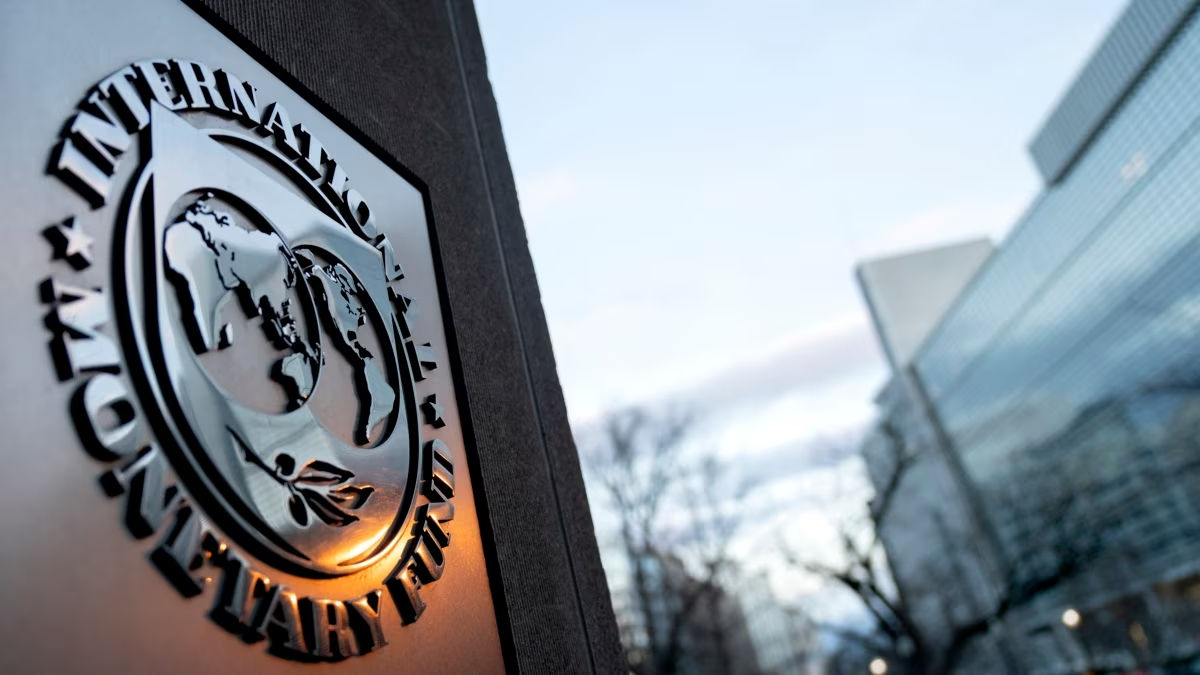




The International Monetary Fund (IMF) has downgraded Nigeria’s economic growth by 0.3 per cent, a reflection of the global economy which has dipped by 1.5 per cent in 2023, compared to 2.6 per cent in 2022.
The Washington based lender in its new World Economic Outlook (for October) themed, “Navigating Global Divergences”, released on Tuesday, faulted weaker oil and gas production, due to the ongoing maintaince work for the slump in economic growth.
Persecondnews reported earlier in July, the lending institution projected that Nigeria’s economy would grow by 3.2 per cent in 2023, adding that the growth would be impacted by security issues in the oil sector.
IMF projection for the country states: “Growth in Nigeria is projected to decline from 3.3 percent in 2022 to 2.9 percent in 2023 and 3.1 percent in 2024, with negative effects of high inflation on consumption taking hold.
“The forecast for 2023 is revised downward by 0.3 percentage point, reflecting weaker oil and gas production than expected, partially as a result of maintenance work.”
The National Bureau of Statistics in its report stated that Nigeria Gross Domestic Product (GDP) grew by 2.51% (year-on-year) in real terms in the second quarter of 2023.
This growth rate is lower than the 3.54% recorded in the second quarter of 2022 and may be attributed to the challenging economic conditions being experienced.
The IMF said due to worsening weather shocks, the global slowdown, and domestic supply issues, the sub-Saharan African region should expect growth decline by 3.3 per cent in 2023.
It, however, stated that this growth will begin to rise by 2024 to 4.0 per cent in 2024, which is still below the region’s historical average of 4.8 per cent.
Overall, global economic growth is projected to slow from 3.5 per cent in 2022 to 3.0 per cent in 2023 and 2.9 per cent in 2024, well below the historical (2000–19) average of 3.8 per cent, the IMF declared.
It added: “Advanced economies are expected to slow from 2.6 per cent in 2022 to 1.5 per cent in 2023 and 1.4 per cent in 2024 as policy tightening starts to bite.
“Emerging market and developing economies are projected to have a modest decline in growth from 4.1 per cent in 2022 to 4.0 per cent in both 2023 and 2024.”
Author











Leave a comment