








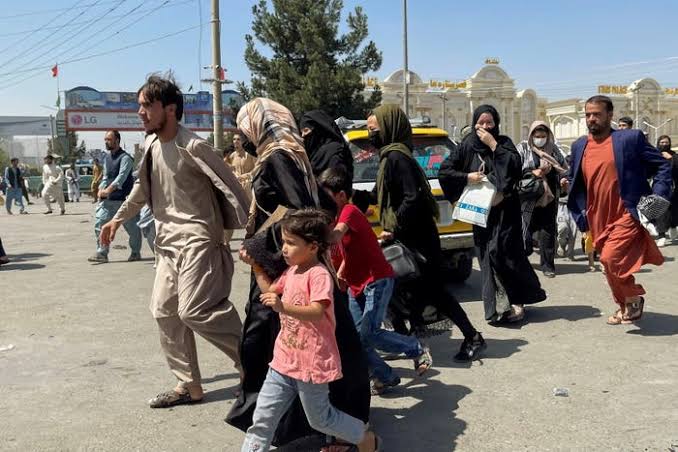




Amid grinding poverty, some desperate Afghan parents are now forced to sell their children to deal with the scourge, according to reports.
A house cleaner in western Afghanistan named Saleha, for example, sold her three-year-old daughter to a man to whom she owed a $550 debt. Saleha, 40, receives 70 cents a day from her job and her husband doesn’t work.
“If life continues to be this awful, I will kill my children and myself. I don’t even know what we will eat tonight,’’ she said.
“I will try to find money to save my daughter’s life,” the Wall Street Journal quotes her husband, Abdul Wahab, as saying.
Khalid Ahmad, the lender, said he had to accept the 3-year-old girl to settle the debt.
“I also don’t have money. They haven’t paid me back,” he said. “So there is no option but taking the daughter.”
Last month, the United Nations’ development agency said Afghanistan is heading toward “universal poverty” following the Taliban’s swift takeover of the country.
Within a year, the poverty rate in Afghanistan will hover at a whopping 97% or 98%, said Kanni Wignaraja, UNDP’s Asia-Pacific Director.
“Afghanistan pretty much faces universal poverty by the middle of next year,” Wignaraja said. “That’s where we’re heading — it’s 97-98% no matter how you work these projections.”
The Taliban took over Afghanistan following President Joe Biden’s decision to withdraw US troops from the region after two decades spent trying to rid the country of extremists. In its takeover, the Taliban renamed the country the Islamic Emirate of Afghanistan, reverting back to the same name used during the last time the regime held power, in 1996. The regime remained in power until 2001, after the US invaded Afghanistan.
After the US ousted the Taliban from power in 2001, Afghanistan made several developmental gains including the doubling of per capita income and an increase in the average number of years of education, Wignaraja said.
Over the past two decades, Afghanistan made significant economic gains that are now in danger of collapsing because of political instability. Afghanistan faces “a crush on local banking” because of the Taliban takeover, Wignaraja said. That instability is only worsened by the pandemic.
The Biden administration, in an effort to limit the Taliban’s resources, froze nearly $10 billion in reserves in the country’s central bank — most of which is reportedly held by the Federal Reserve Bank in New York.
The move has been criticized as misdirected and will ultimately hurt Afghans more than the Taliban, Shah Mehrabi, a senior board member of Da Afghanistan Bank, said.
Author












Leave a comment