










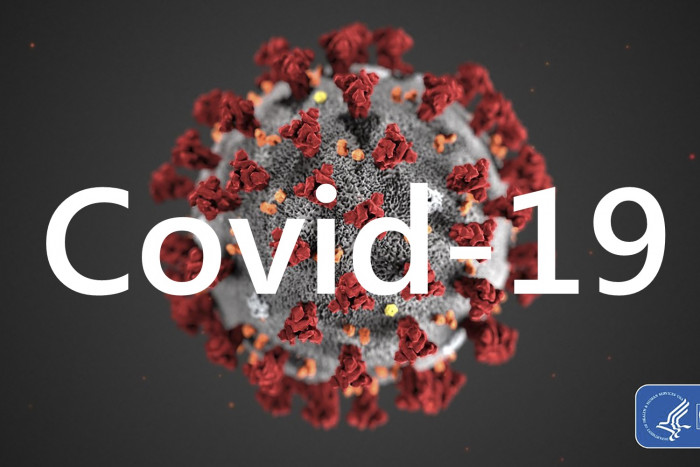




Following the resumption of schools nationwide, the Nigeria Centre for Disease Control (NCDC), says in spite of evidence showing that younger people appear to be less at risk for COVID-19 infection, low risk does not mean no risk.
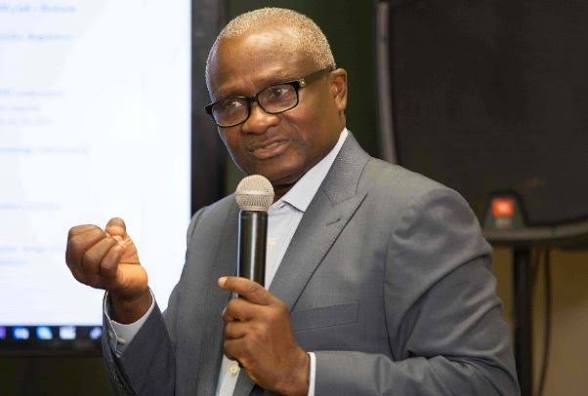
The Director-General of NCDC, Dr Chike Ihekweazu, said this on Thursday at the Presidential Task Force on COVID-19 media briefing in Abuja.
“I would like to emphasise that though there is evidence to show that younger people appear to be less at risk for COVID-19, low risk does not mean no risk.
“And we have seen this virus being transmitted into children, even though it is not transmitted as intensively as in adolescents and adults.
“Therefore there must be synergy between parents, school authorities, state ministries of health, state epidemiologist and the federal government to mitigate the impact of COVID-19.
He said reopening of schools would, no doubt, bring benefits to students who have been at home for many months and to the economy.
Ihekweazu explained: “In the past few months, we have been working with the Ministry of Education, schools and states and any other stakeholders critically parents, to ensure the schools are safe as possible for children.
“As a parent myself, I understand the anxiety and concerns that parents have and I would like to reassure Nigerians that our schools reopening in various states—the safety of our children, our school staff are priority to the Federal Government of Nigeria.
“Remember that at the beginning of this outbreak, we had really limited knowledge on this new virus. Like the rest of the world on the transmission dynamics of the virus and critically how it affects children.
“The virus behaves differently from most other viruses that we know, where transmission has always been primarily driven by children, but now we’re better informed to continue to adapt our guidelines as new knowledge emerges.’’
“Drawing from what we now know in our context and in our country, with our experiences till date, we have worked with the federal ministry of education to develop new guidance for the safe reopening of schools across the country.’’
Ihekweazu also stressed: “We have put this in a very simple format so every school can pick this up across the country and adapt it to its own uses. We have done this carefully recognising that the resources, opportunities of schools differ around the country, but really focusing on principles of what needs to be done.
“Some schools will get there earlier, others will get there a little bit later, but the key thing is that we are all moving in the direction of safe reopening of our schools.
“These guidelines include recommendations around regular risk assessments; sharing of the medical status of every student; a clear communication plan so that when there’s an outbreak of the cluster of cases schools know exactly what to do, who to inform, how to respond; advice on designated handwashing areas, triad of patients, sample collection all these critical questions that every school in Nigeria will be asking how are we going to do this.
“More detailed guidelines on school reopening are on our website but this is to really give us in two pages some simple guides to everyone to use.’’
The NCDC DG said: “Now, we have to move forward; reopen our schools, get back to school but try and do it as safely as possible to mitigate the effect of this virus.
“We are learning from other countries, where some reopened too aggressively and had to shut down school settings again, so we’re going to try very hard to do this safely, do it in a way that we can we reopen our schools but also continue protecting the health of all Nigerians.”
Meanwhile, the Minister of Environment, Alhaji Muhammad Mahmood, has said each state would get between N1, 000 and 1,621 of the 60,000 environmental health workers already mobilized to states to ensure safe reopening of schools across the country.
Author









Leave a comment