The recent death of Amadon Gon Coulibaly, Prime Minister of Cote d’Ivoire, has put the political permutations of the ruling RHDP party in a dicey situation as nominations for candidates begins July 16.
Coulibaly, 61, had been chosen as the ruling party’s candidate for October’s presidential election, after Alassane Ouattara said he would not seek a third term in office.
The political uncertainty worsened with the resignation of Vice-President Daniel Duncan on Monday, July 13, for “personal reasons.”
A pressured Ouattara had in March 2020 declared that he would not seek re-election in October and went on to anoint Prime Minister Mamadou Koulibaly as the candidate of the ruling party.
But some international affairs experts have some advised the party on how to forge ahead.
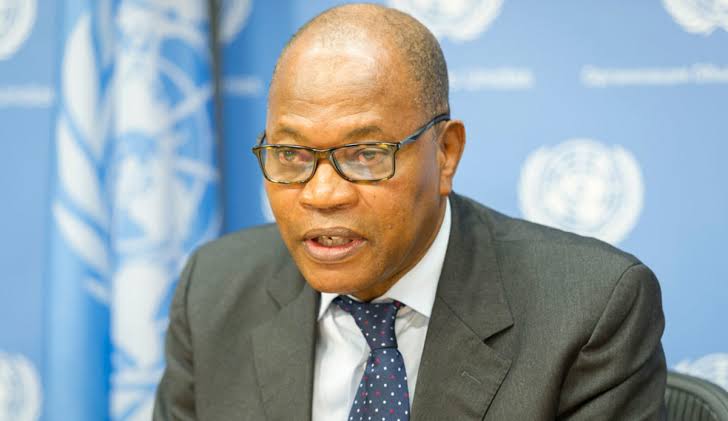
According to Mr Mohamed Ibn Chambas, United Nations Secretary-General’s Special Envoy to West African and Sahel, the tragic and untimely demise of the Prime Minister of Côte d’Ivoire, Amadou Gon Coulibaly, means the ruling RHDP party is obliged to go back to the drawing board to quickly come up with another presidential candidate.
“He had already been designated as the party’s candidate in the 31 October, 2020 elections. The party doesn’t have much time on its hand as nominations for Présidential candidates open on 16 July, when they are required to pick up endorsements forms to be completed and returned on 31 July.
“The decision of former President Konan Bedie, who recently turned 86 to be a candidate makes it highly probable that the incumbent President Alhassan Ouattara may now be persuaded by party executives to be their party’s flag bearer.” Ouattara is 78,” he said.
Also, Mr Paul Ejime, an international affairs analyst, said the ruling party should follow the spirit and letters of the Constitution which provided for two terms for presidency.
“It is all about balancing the power among the political, religious and ethnic forces in the country. The challenge of the ruling party is to get a strong candidate so Ouattara will be persuaded not to run for office.
“The opposition, on thei part, should also not play into the hands of Ouattara by helping him make up his mind to join the fray.
“It is a delicate and complex situation that will require political maturity to ensure that the situation does not degenerate into a constitutional crisis and another civil war like what happened in between 2010 and 2011.
“Also important is the role that France, the former colonial power, will play because it has been supporting Ouattarra. The international community should act with sincerity and dispassionately in the interest of Ivorian population.
“At this juncture, the international community might want to intervene through ECOWAS, AU and the UN through its Office for West Africa and Sahel,” Ejime said.
The fear is rife that if the country do not manage the situation very well the country could degenerate into another crisis.
Cote d’Ivoire, for several decades a bastion of peace and stability in politically restive West Africa is also no stranger to political tension and uncertainty, particularly from the 2010 disputed presidential election.
More than 3,000 lives were lost from the post-election violence that followed, resulting in the intervention by the international community, which rallied behind the current president Alasane Ouattara, who claimed victory in that election.
The sitting President Laurent Gbagbo’s refusal to concede defeat unleashed violence between his supporters and those of Ouattara. Gbagbo was later deposed and taken to The Hague for trial at the International Criminal Court. He has now been granted conditional release.
Ouattara, assumed power in 2011 and later won re-election but his second term mandate ends in October, when another presidential vote will take place.
However, political tension remains. Against protest by the opposition, president Ouattara and his RHDP party carried out a controversial constitutional change in 2016, which allows for a two-term presidency and the creation of the position of Vice President.
Meanwhile, former rebel leader Guilluame Soro, who had teamed up with President Ouattara and served as President of the National Assembly has since fallen out with the president.
He is now exiled in France after being tried in absentia for embezzlement and sentenced to 20 years in jail in Cote d’Ivoire. This was after he had declared his intention to run for the presidency in October.










 Per Second NewsJuly 15, 20203 Mins read845




Leave a comment