










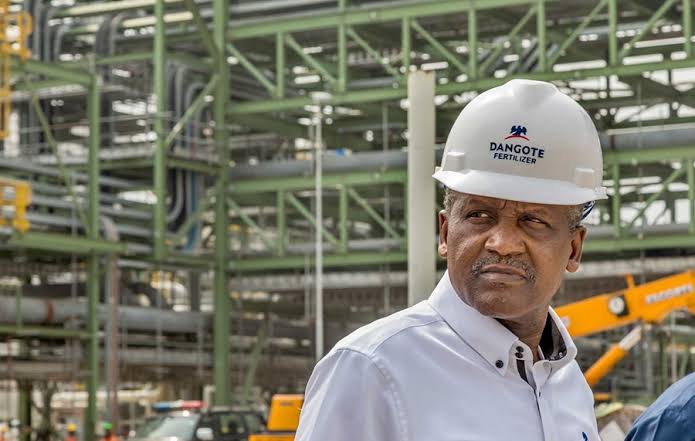



With a 900,000 metric tonnes per annum capacity, Dangote’s $2 billion Petrochemical Plant located in Ibeju-Lekki on Island is to produce 77 different high-performance grades of polypropylene in the country when it comes on stream.
With a turnover of $1.2 billion, the 900,000 metric tonnes per annum capacity Dangote Petrochemical plant, situated alongside the Dangote Refinery, has been strategically positioned to cater to the demands of the growing plastic processing downstream industries not only in Africa, but also in other parts of the world.
Giving an update on the petrochemical plant in Lagos, Group Executive Director, Strategy, Capital Projects & Portfolio Development, Dangote Industries Limited, Mr Devakumar Edwin said the Dangote Petrochemical, will drive investment in the downstream industries massively , generating huge value addition in the country, and generate mass employment.
It will also increase tax revenues, reduce foreign exchange outflow and increase the Gross Domestic Product (GDP) of the country.
According to him, the Petrochemical plant whichever is nearing completion, will also embark on the production of polyethylene products in the nearest future.
“The Dangote Petrochemical plant is being built alongside the refinery. Primarily, the Dangote Petrochemical Plant is going to produce polypropylene products. We are thinking of adding polyethylene products at a later stage.
“We have 77 types of polypropylene, which can go for different usage that we can produce from our petrochemical plant.
“Currently, the plant is capable of producing about 900,000 tonnes of polypropylene per annum. Our Petrochemical plant should be the biggest in Africa,” Edwin said in a statement given to Persecondnews.
Edwin said the petrochemical plant would reduce the demand for foreign exchange from the nation’s treasury to import petrochemical by-products.
“Right now, raw materials from polypropylene are imported into the country. There is no foreign exchange for manufacturers to import raw materials. The Dangote Petrochemical plant is going to take care of this challenge.
“When the raw materials are locally available, there will be many more people who will be willing to invest in the economy.
“So, it not just the savings of foreign exchange from petrochemical products’ importation, the country’s downstream sector will also benefit hugely from the availability of petrochemicals in the country,” he said.
Author








Leave a comment