











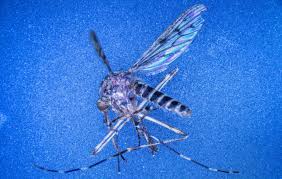




For the first time ever, mosquitoes have been discovered in Iceland, a country historically believed to be entirely free of the insects.
This unprecedented find follows the record-breaking heat the North Atlantic nation experienced this spring, raising fresh concerns about how global warming is impacting its fragile ecosystem.
Local insect enthusiast Bjorn Hjaltason spotted the mosquitoes last week while observing moths using wine-soaked ropes.
He later identified two females and one male, which experts at the Icelandic Institute of Natural History confirmed as Culiseta annulata, one of the few species capable of surviving winter.
The insects were found in Kjós, a glacial valley southwest of the capital, Reykjavik.
Until now, Iceland and Antarctica were the only two places on Earth without mosquitoes, largely due to the cold climate and lack of stagnant water.
“I could tell right away that this was something I had never seen before,” Hjaltason wrote on Facebook, adding that “the last fortress seems to have fallen.”
Experts say the development follows an unusually hot May in Iceland, when temperatures hit 26.6°C (79.8°F) — the highest ever recorded in the country.
Normally, heatwaves last just two or three days, but this year, temperatures above 20°C persisted for over a week.
Entomologist Matthías Alfreðsson, who confirmed the discovery, said the species is common across Europe and North Africa but it remains unclear how they reached Iceland.
He added that scientists will monitor the area next spring to determine whether the mosquitoes have established a permanent population.
Hjaltason believes the insects may have arrived through shipping routes.
“Things often come in with containers,” he said. “But if three of them came straight into my garden, there were probably more.”
The finding has sparked discussions among climate scientists, who say Iceland’s warming trend could reshape its once mosquito-free environment.
Author












Leave a comment