











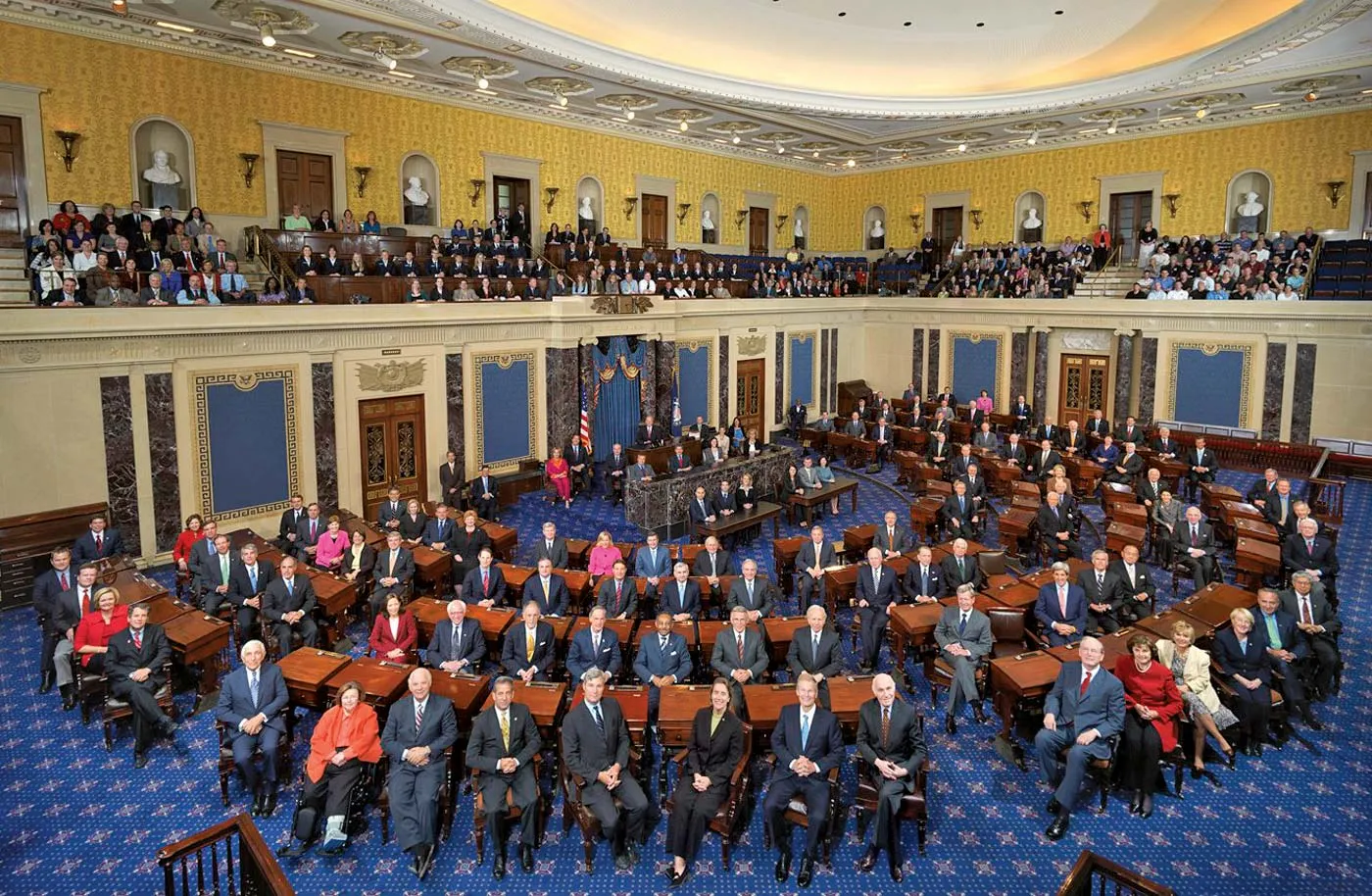




The US Senate on Thursday approved a package of spending cuts proposed by President Donald Trump, canceling over $9 billion in funding for foreign aid programmes and public broadcasting.
The measure was passed with 51 votes for and 48 against, despite concerns from some lawmakers about the impact on global health initiatives and public media.
The spending cuts are part of a rescissions package, a rare legislative move that allows Congress to claw back previously approved funds.
The package is a key test of how easily lawmakers can implement savings sought by Elon Musk’s Department of Government Efficiency (DOGE), which was established to streamline government spending.
Senator Lindsey Graham, a Republican from South Carolina, supported the bill, saying it aligns with Trump’s promises to cut spending.
“I’ve been a big fan of the foreign aid accounts… I’m a big hawkish guy, but you need foreign aid. You need soft power,” Graham said.
“But when you start spending money on a bunch of junk, and liberal programs disconnected from the purpose of the aid package, it makes it difficult on a guy like me.”
The package slashes around $8 billion in foreign aid, with much of that approved for humanitarian organization USAID, and $1 billion from the Corporation for Public Broadcasting, which funds National Public Radio (NPR) and the Public Broadcasting Service (PBS).
Democrats argue that cutting funding for public broadcasting will not meaningfully reduce the deficit but instead dismantle a trusted source of information for millions of Americans.
Senator Cory Booker, a Democrat from New Jersey, criticized the bill, saying, “It is yet another example of the spirit and ideals of our Constitution being undermined in a terrible way.
“We are a nation that believes that (Congress) has a real role… And this is a bunch of my colleagues in thrall of the president, surrendering the powers of us, and the urgency for us to work together and do it in a bipartisan way to improve budgets.”
The bill now goes back to the House of Representatives for final approval, with lawmakers facing a tight deadline.
Congress must approve the cuts by Friday, or the White House will have to spend the funds as originally intended.
The vote is seen as a significant step in Trump’s efforts to reduce government spending, but Democrats are likely to continue pushing back against the cuts.
Author










Leave a comment