









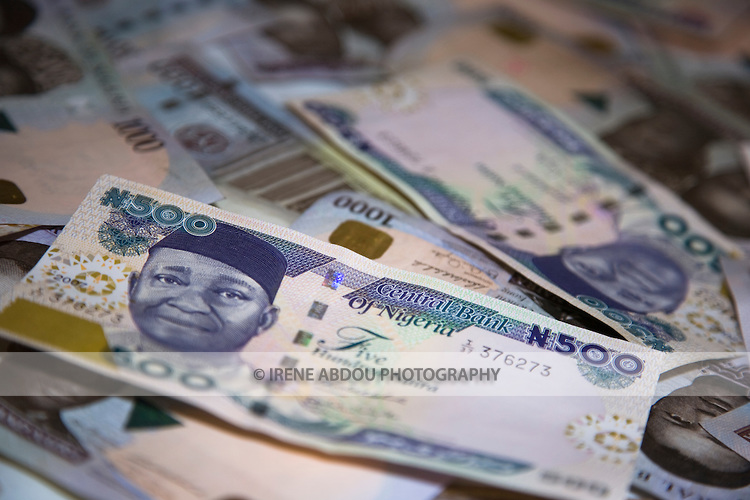



The International Monetary Fund (IMF) says Nigeria’s currency, the Naira is overvalued at the official market by about 18.5 per cent, advising the Central Bank of Nigeria (CBN) to do the needful without further delay.
IMF demanded a more “transparent and market-based exchange rate policy” to instil confidence in the market.
IMF Article IV Consultation with Nigeria, said Nigeria’s long-running policy of a stable exchange rate has produced limited benefits.
Persecondnews reports that the exchange rate on CBN’s official website is N379 to a dollar at the official market but at the parallel market it is about N475 to a dollar.
IMF recommended a gradual and multi-step approach to establishing a unified and clear exchange rate regime with the near-term focus on allowing for greater flexibility and removing the payments backlog.
The IMF Board observed that “the accommodative monetary stance remains appropriate in the near term, although tightening may be warranted if the balance of payments or inflationary pressures were to increase”.
The IMF Executive Board, which visited Nigeria, also released its findings on Nigeria’s economy to the Federal Government.
It recommended establishing a market-clearing unified exchange rate with the near-term focus on allowing greater flexibility and removing the backlog of requests for foreign exchange
The stabilised exchange rate policy, combined with administrative control of imports, has led to periods of real effective exchange rate appreciation interrupted by episodes of forced large adjustments.
“Staff’s latest estimates suggest an overvaluation of the real effective exchange rate (applied on the current level of the official exchange rate) of 18.5 per cent, with the external position assessed as substantially weaker than what is consistent with fundamentals and desirable policy settings,” it said.
IMF said gross reserves levels are significantly below the IMF’s Assessing Reserve Adequacy metric and projected to remain so in the medium term.
External financing is projected to rely on Foreign Direct Investment, issuance of Eurobonds and some drawdown of reserves as portfolio flows are expected to only gradually recover over the medium-term.
The Fund said clear exchange rate policy is needed to instil near-term confidence and bring long- term gains.
“The current system, with its multiple windows and un-transparent rules of Forex allocation, creates uncertainties for the private sector.
“The unification of various rates into one market-clearing rate,” it said.
The Fund also advised the Federal Government to increase its value-added tax (VAT) rate to at least 10 per cent by 2022 and 15 per cent by 2025 from 7.5 per cent now to boost revenues after it recovers from a recession.
In the report, the Fund said the government must continue to pursue reforms to help overcome the twin shocks of the oil price crash and the COVID-19 pandemic.
The Fund said Nigeria’s economy has been hit hard by the COVID-19 pandemic.
Following a sharp drop in oil prices and capital outflows, real GDP is estimated to have contracted by 3.2 per cent in 2020 amidst the pandemic-related lockdown.
The IMF asked the CBN to stop financing the budget deficit.
It said: “In the medium term, the monetary policy operational framework should be reformed and Central Bank financing of budget deficit phased out to reduce inflation.”
The Board also wants Nigerian banks to tighten the conditions for facilities given to Nigerians as COVID-19 debt relief.
“COVID-19 debt relief measures for bank clients should remain time-bound and limited to those with good pre-crisis fundamentals”.
Author










Leave a comment