














By Omoyeni Ojeifo
To expand educational access and equip Nigerian youths with market-ready skills, the Federal Government has prioritized key investments across student financing, technical education, teacher development, digital learning, and school infrastructure.
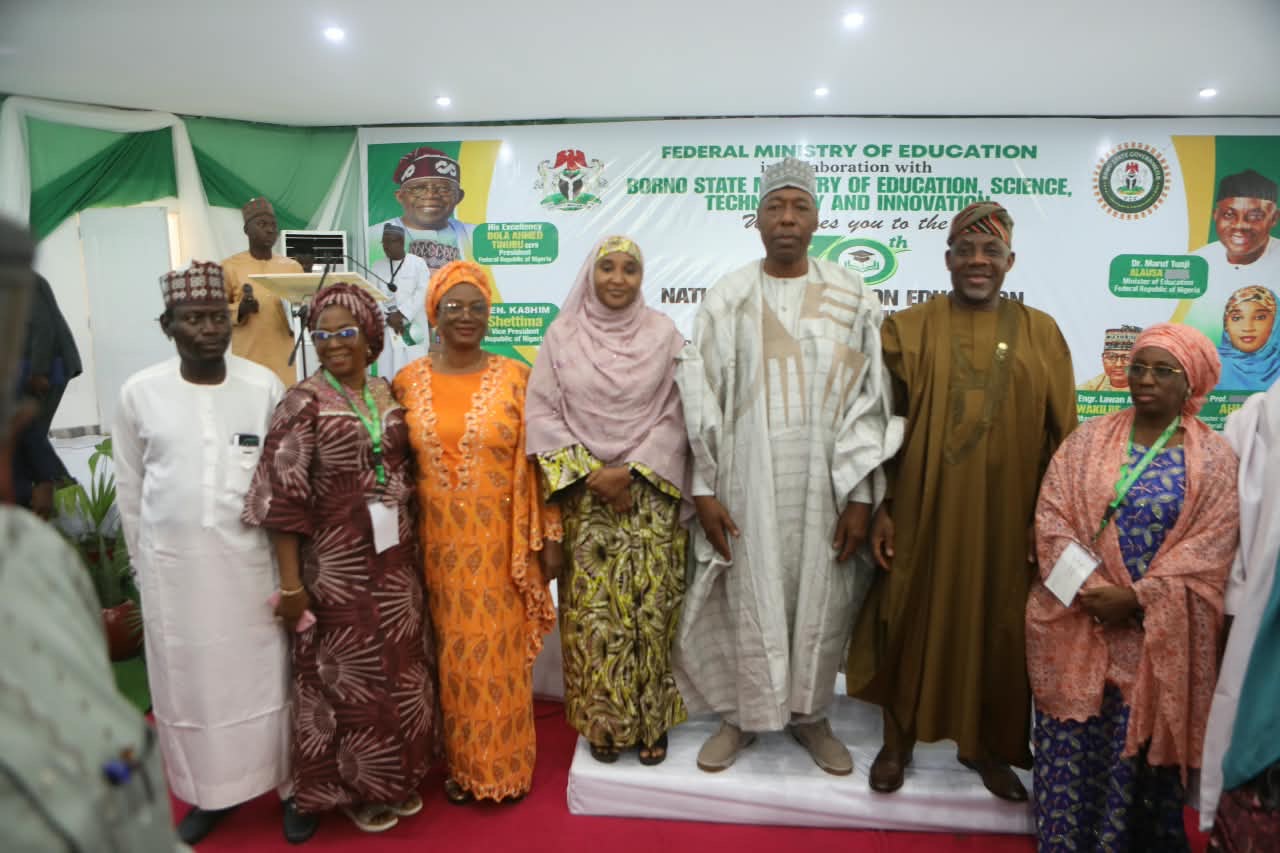
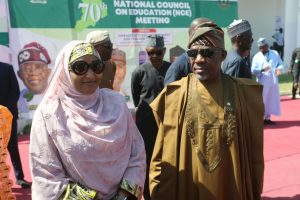
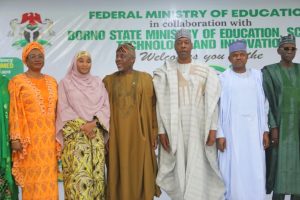
The Minister of Education, Dr. Maruf Tunji Alausa, disclosed these initiatives on Thursday during the Ministerial Session of the 70th National Council on Education (NCE) meeting in Maiduguri, Borno State.
According to Alausa, interventions under President Bola Tinubu’s Renewed Hope Agenda were designed to improve learning outcomes, strengthen teachers’ professionalism, expand educational opportunities and address skills gaps across the country.
On basic education, the minister highlighted the $532 million HOPE for Basic Education programme and the expansion of the Adolescent Girls’ Learning and Empowerment Project from 18 to 21 states.
He also identified inclusive and alternative learning interventions for displaced and disadvantaged children as part of efforts to ensure that vulnerable learners are not excluded from educational opportunities.
On student financing, Alausa disclosed that the Nigerian Education Loan Fund (NELFUND) had processed approximately 2.65 million applications and recorded about ₦379 billion in disbursements.
He added that the Federal Government’s Technical and Vocational Education and Training (TVET) programme had attracted more than 2.8 million applications, reflecting demand for vocational training and skills acquisition.
The minister also highlighted admission reforms through the Joint Admissions and Matriculation Board (JAMB), aimed at strengthening access and improving the administration of tertiary admissions.
On teacher development, he disclosed that more than 80,000 teachers were undergoing certification and licensing through the Teachers Registration Council of Nigeria (TRCN).

He said the government was targeting 75 per cent teacher certification by the end of 2027, with all senior secondary school teachers expected to be certified by 2028.
For tertiary institutions, Alausa highlighted ₦55 billion allocated to medical education infrastructure and ₦150 billion committed to institutional revitalisation.
He further disclosed that ₦32 billion had been committed to needs-assessment projects in public colleges of education, while ₦39 billion had been released to 166 public tertiary institutions under the Needs Assessment programme.
On digital learning, the minister disclosed that more than ₦11 billion had been committed to digital skills development, alongside zero-rated access to approved educational platforms.
He added that more than 40,000 geo-located schools had been integrated into digital education management systems to strengthen planning, monitoring and school safety.
Alausa also confirmed that 34 solar mini-grid installations had been completed in tertiary institutions, with plans to extend independent solar power to all federal tertiary institutions by 2028.
The minister urged members of the Council to ensure that their deliberations translated into measurable improvements, stressing that infrastructure development must go hand in hand with teacher welfare, professional development, accountability and quality learning.
He commended Borno State for increasing school enrolment from approximately 770,000 learners in 2018 to about 1.8 million, attributing the progress to investments in school facilities, improved security and purposeful leadership.
Alausa also lauded the public schools visited in the state, observing that some of their facilities compared favourably with those of private schools.
In his remarks, Governor Babagana Umara Zulum commended the Federal Government’s education reforms, particularly efforts to expand access, improve teacher motivation and address the mismatch between graduates’ skills and labour-market requirements.
Zulum disclosed that his administration was establishing 27 high-skilled colleges, with 15 already completed and the remaining 12 expected to be completed by the end of 2026.
He said the institutions would promote skills acquisition and connect non-formal education with formal learning through literacy, numeracy and digital programmes.
The governor reaffirmed his administration’s commitment to expanding schools and technical institutions, improving teachers’ welfare and providing incentives for hardworking teachers.
He also emphasised the importance of sustained teacher recruitment and stable leadership in strengthening the education system.
Earlier, the Minister of State for Education, Prof. Suwaiba Said Ahmad, commended the Borno State Government for hosting the Council and commended its investments in modern school infrastructure.
She said investments in communities affected by conflict helped restore dignity, opportunities and hope to children whose education had been disrupted.
She also acknowledged the contributions of education administrators, agencies, tertiary institution leaders, development partners and civil society organisations.
The Borno State Commissioner for Education, Science, Technology and Innovation, Engr. Lawan Abba Wakilbe, noted that the state had more than 1.8 million learners, 5,792 usable classrooms and 129 functional senior secondary schools, compared with 34 in 2019.
Wakilbe recalled that Borno hosted the National Council on Education in 1971 and 1985, describing the current meeting as significant in the state’s education history.
The 70th National Council on Education meeting, themed “Infrastructure Development and Teacher Motivation for Improved Learning Outcomes,” brings together ministers, commissioners, permanent secretaries, heads of education agencies and other stakeholders to deliberate on strategies for strengthening education delivery nationwide.
Author







Leave a comment