














By Joycelyn Ellakeche Adah
The Subnational Climate Governance Performance Rating and Ranking has released the rating of the 36 states of the federation with Katsina State emerging the first.
This year’s SCGPRR report shows that and Kano came in second and third, while Lagos and Kwara secured the fourth and fifth spots, respectively.
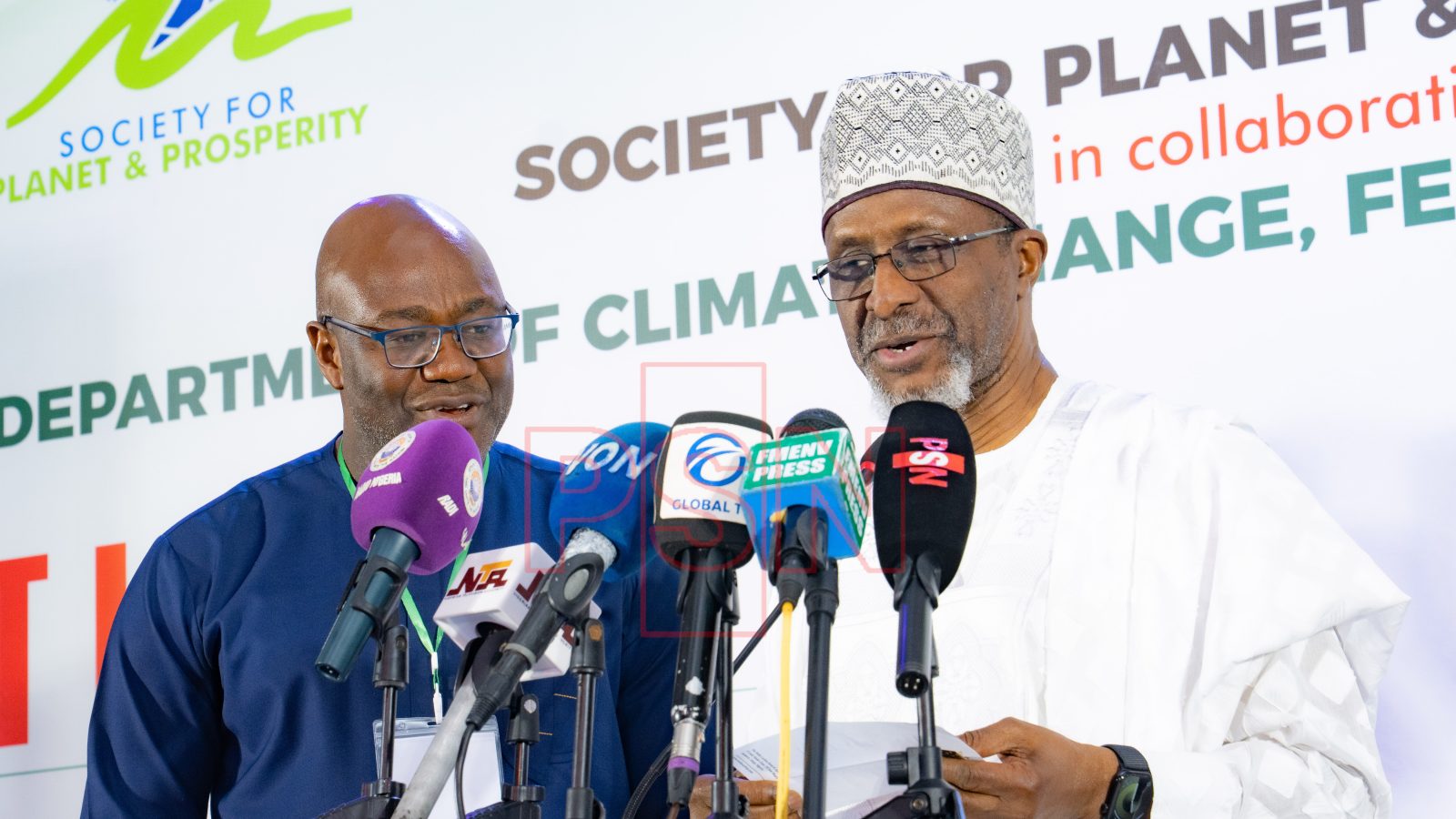
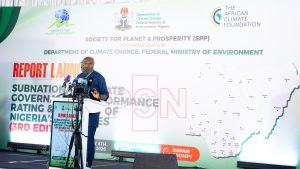
The report was carried out by the society for Planet and Prosperity (SPP) in collaboration with the Department of climate change, Ministry of Environment at the 3rd edition of SCGPRR.
The rating is a measure of how well state governments are responding to the growing challenges of climate change.
It assesses the policies, plans, funding and practical actions being taken by states to address issues such as flooding, extreme heat, waste management, environmental degradation and other climate related risks.
The assessment also looks beyond government announcements to consider how far these policies and commitments are being implemented and whether they are producing measurable results.
States are scored against the various indicators and ranked according to their overall performance.
The ranking therefore provides a basis for comparing states, highlighting those making stronger progress on climate action while drawing attention to states where more effort, resources and effective implementation may be required.
Beyond measuring the performance of the states, the ranking is also important to Nigeria’s climate response because many of the impacts of climate change are felt directly at the state and community levels.
It gives the Federal Government a clearer picture of how states are responding to climate challenges, while helping individual states identify gaps in their policies, planning, funding and implementation.
It also provides an opportunity for states to compare their progress, learn from better performing states and strengthen their response to climate change issues.
For the Federal Government, the findings can help inform policy, planning and support to states, while providing a basis for tracking climate action across the country.
Speaking at the launch in Abuja, Minister of Environment Balarabe Abbas Lawal said the ranking was critical to Nigeria’s climate response because the Federal Government could not deliver the country’s climate commitments alone with the impact of climate change increasingly being felt through, drought, pressure on agriculture, water resources and livelihoods.
He said the ranking provides an evidence based way of assessing how states are responding, asking whether climate priorities are reflected in their plans and budgets, while resources are being mobilised and projects are delivering measurable benefits.
“Nigeria’s climate response cannot be delivered by the Federal Government alone. The success of our national commitments will ultimately depend on the strength of implementation at the subnational and community levels,” he said.
The Minister called on state governments to make climate action an integral part of their development and investment priorities, strengthen the institutions responsible for delivery and integrate climate considerations into their plans and budgets.
He also urged states to attract climate finance, private investment and strategic partnerships, stressing the need to connect policies with actual results.
“I encourage every State to establish a clear pathway from policy to budget, budget to projects, and projects to measurable results,”
Lawal said the ranking should be used by states as a tool for improvement and accountability rather than simply as a measure of who performed better.
He commended high performing states and urged others to strengthen their systems, while assuring that the Federal Government would continue to support states through technical assistance, capacity development and collaboration.
“The ranking should not be viewed merely as a scorecard, but as a strategic management and accountability tool for identifying gaps, tracking progress and accelerating delivery,”
On her part, the Director, Department of climate change, Ministry of Environment shows, Dr. Iniobong Abiola-Awe, called on state governors to provide political leadership by making climate change a priority in their development agendas, while urging state climate institutions to translate policy commitments into implementable programmes.
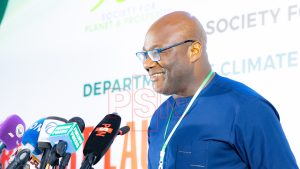
She also acknowledged the role of development partners and the private sector in supporting climate action, noting that the Federal Government would continue to provide policy direction, coordination and technical support.
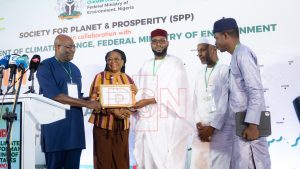
She commended participating states and called for stronger collaboration and accountability in delivering national climate action.
“National ambition can only be fully realized when it’s translated into actions at the subnational, all the way down to the communities, Our collective task is clear: to ensure that we advance a low carbon, inclusive pathway,”
Global Engagement Manager, Under2 Coalition at Climate Group, Yusuf Hassan explained that the ranking was important because it is helping to move climate commitments from policy statements to actual systems and actions at the state level.

He noted that almost every state improved between the first and second editions of the ranking, with progress including new climate action plans, policies and dedicated institutions.
“We see governments make climate commitments without the systems dedicated to achieve these commitments, and it’s through reports like this where this changes, and the results speak for themselves,”
Hassan assured states that they are not expected to undertake climate actions alone, noting that Nigeria has become one of the strongest voices within the Under2 Coalition, with five member states, including Cross River, Sokoto, Taraba and Lagos.
He congratulated the states recognised in the ranking and pledged continued support for those working to improve their performance, including through financial grants.
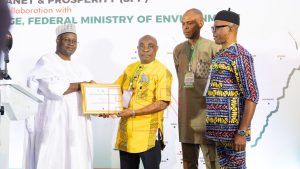
With the ranking now placing greater emphasis on implementation, investment and measurable results, the focus will increasingly be on whether states can translate climate policies and commitments into action that makes a difference in communities.
For the states, the ranking provides both recognition and a measure of accountability, while for the Federal Government and its partners, it offers a clearer basis for identifying gaps and directing support.
The challenge now is for the states to turn their positions on the ranking into sustained action, stronger climate governance and tangible results for the people.
Author






Leave a comment