






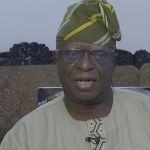








Dr. Monday Ubani (SAN), Special Adviser to Senate President Godswill Akpabio, has expressed confidence that amendments to the Electoral Act will be finalized ahead of the 2027 general elections.
Speaking during an interactive session with journalists, Ubani emphasized that Nigeria has the institutional capacity to host credible elections independently, provided there is sufficient political will and a robust legal framework.
He further noted that the proposed bill is expected to receive President Bola Tinubu’s assent once it successfully clears the National Assembly.
“The House of Representatives has passed their version. What Nigerians are waiting for now is the Senate. They were supposed to consider it before the break. Once they resume, they will certainly pass it,” Ubani said.
He stressed that early passage of the law is critical so that all electoral stakeholders clearly understand the rules guiding the process well ahead of the polls.
“The election is next year. INEC and everyone involved must know the law and comply with it. When the law does not exist, you can’t know what to comply with,” he said.
Ubani expressed optimism that any differences between the Senate and House of Representatives versions of the bill would be harmonised quickly, paving the way for presidential assent.
“I’m looking at it that before the first week of February, the law would have been passed and assented to. The President will be eager to assent to it,” he added.
The senior lawyer said Nigerians yearn for transparent and credible elections comparable to those in other African democracies and insisted that foreign influence is unnecessary.
“Other nations in Africa have moved ahead of us, such as Ghana, South Africa, and even Kenya. We are the giant of Africa; we shouldn’t be compared to countries that clamp down on freedoms during elections,” he said.
Ubani emphasised that credible elections are a matter of national choice, not international pressure.
“We don’t need Donald Trump or any external influence to do the right thing. If we truly want good governance, it doesn’t take anybody from outside. Let the people cast their votes and let the votes reflect the will of the people,” he said.
Ubani highlighted the urgent need for further amendments, noting that the 2022 Electoral Act exposed significant flaws—particularly within election litigation.
He criticized the redundant requirement for petitioners to call witnesses from every polling unit, even when documentary evidence clearly proves the results.
“Why must I call witnesses when the evidence is already in black and white?” Ubani queried, arguing that many petitions fail on technicalities rather than merit.
He pointed out that cases are often dismissed because lawyers are accused of “dumping” documents on the court.
To streamline the process, Ubani advocated for reforms that allow a single lawyer or collation officer to tender documents.
Furthermore, he emphasized that electronic transmission of results remains the most vital reform for safeguarding the integrity of Nigerian elections.
“Once results are transmitted immediately from the polling unit, there will be no room for manipulation at collation centres,” he said, noting that real-time transmission would also strengthen judicial processes.
The adviser called for sustained voter education, particularly on procedures like changing polling units.
“People complain about movement on election day, but they don’t realize that you can change your polling unit online. I have done it myself and it worked,” he said.
Ubani further criticized the widespread lack of awareness surrounding the 2022 Electoral Act, noting with concern that some judges continue to rely on repealed provisions.
To combat this, he pledged to engage media and judiciary correspondents to break down the key provisions of the amended Act once it is passed.
Regarding judicial efficiency, Ubani lauded the shift toward virtual hearings but stressed that improved infrastructure and clearer legal guidelines are essential to overcoming current technical hurdles.
On the subject of representation, he advocated for the institutional inclusion of women, proposing that reserved legislative seats could serve as a vital foundation for female leadership in governance.
Addressing fiscal policy, Ubani defended the new tax laws, describing them as a fair system that shields low-income earners while ensuring the wealthy contribute their proportional share.
He said the path to rebuilding Nigeria’s democratic confidence and reversing economic decline lies in a combination of credible elections, accountable leadership, and total transparency.
Author












Leave a comment