













By Joycelyn Ellakeche Adah
From human trafficking allegations and street violence to declining trade and mounting visa rejections, Nigerians in the United Arab Emirates (UAE) are facing collective fallout from the actions of a few.
“We contributed to the situation,” said Engr. John David Nkwor, an eight-year Dubai resident.
His admission reflects a growing consensus among law-abiding nationals: that widespread misconduct by some compatriots has fueled the strict visa restrictions now crippling business, trade, and residency for thousands across the Gulf nation.
For Nkwor, his response is in affirmative. He believes some Nigerians have played a significant role in creating the negative perception that has surrounded the country’s nationals in the UAE
But he is equally concerned that those who have committed no offence are being made to bear the consequences.
His account raises a difficult question for the Nigerian community, when the conduct of a few damages the reputation of an entire nationality, who pays the price?
To assess the situation firsthand, a Persecondnews team traveled to Dubai, where Digital Content Editor Joycelyn Ellakeche Adah interviewed Nigerian residents and business owners across the UAE.
Securing candid interviews proved challenging. Many subjects were noticeably cautious, while others declined to comment out of fear of retaliation—either from compatriots or UAE authorities.
For many, speaking publicly about the visa crisis carried risks they were unwilling to take.
That reluctance added another dimension to the reporting.
Beyond the economic consequences of the visa difficulties, it revealed the unease surrounding the issue among Nigerians in the UAE, some of whom were concerned about being identified or quoted.
In Dubai’s commercial districts, the consequences are being felt in more than one way.
Nigerian traders and business operators say the reduced flow of customers from home has affected their earnings, while cargo and freight operators complain that fewer buyers mean fewer goods to ship to Nigeria.
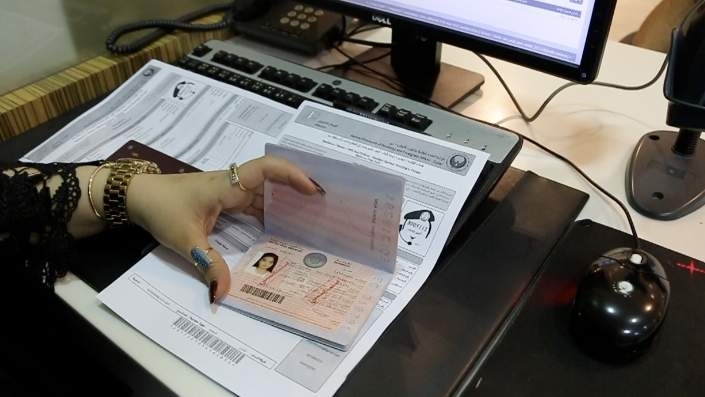
Some residents also describe difficulties renewing their visas, changing employers and maintaining legal status.
For Mr Blessed, a Nigerian businessman in Dubai, the decline in Nigerian visitors has significantly affected businesses that once depended on their patronage.
He recalled that Nigerians were major buyers in Dubai’s markets, so much so that some shop owners made efforts to learn Yoruba and Igbo to communicate with their customers.
“Nigerians are known for trading. Nigerians are business people. So once they come in, they come in to buy,” he said.
According to him, the relationship went beyond shopping. Nigerians who travelled to purchase goods also sustained a network of businesses involved in packaging, freight forwarding and shipping merchandise back home.
“When they stop, of course, it will affect anybody. It is just like you own a shop and the majority of your customers are from a particular area. Once anything happens in that area and those customers stop coming, it affects your shop. Exactly the same thing,”
He recalled hearing shop owners in some commercial markets complain about the absence of Nigerian customers, with some telling him, “No Nigeria, no Dubai.”
Blessed said the reasons behind the visa restrictions remained unclear to many Nigerians, with different explanations circulating within the community.
He recalled that the situation became pronounced around 2022, when stories emerged about disagreements between the Nigerian and UAE governments and concerns over the conduct of some Nigerian visitors.
He also questioned why Nigerians, whom he described as major contributors to commercial activity in Dubai, should face such difficulties without a clear explanation of the issues involved.
But the question of whether the behaviour of some Nigerians has contributed to the situation is one that Nkwor believes cannot be ignored.
Speaking candidly, he cited alleged cases of human trafficking, prostitution related disputes, illegal alcohol sales, street violence and other criminal activities involving Nigerians in the UAE.
He described incidents in which, according to him, women were brought into the country under questionable circumstances, while disputes involving some of them reportedly escalated into dangerous confrontations.
He also recalled witnessing street fights involving machetes and incidents in which men allegedly attempted to abduct women described locally as “paying girls” after disputes.
These accounts were not independently verified, and Nkwor did not provide police records or other documentation to establish the scale of the incidents. However, he maintained that such conduct had contributed to the negative perception of Nigerians in the country.
“I would like to be very candid with you. Nigerian youths played a greater part in this very issue affecting us here. ”
He nevertheless rejected the idea that the alleged offences of individuals should justify restrictions affecting an entire nationality.
“That shouldn’t be the sole reason why the UAE government should penalise everybody and generalise the whole issue. There are existing laws. When you default, you face the consequences.”
His argument exposes the central frustration among Nigerians interviewed, the distinction between individual accountability and collective punishment.
While they acknowledge that Nigerians who violate the laws of their host country must face the consequences, they insist that legitimate travellers, businesspeople and law abiding residents should not be treated as though they share the same conduct.
The debate has become more complicated because the UAE’s visa restrictions have passed through several phases, with diplomatic disagreements between both countries also playing a significant role.
In December 2021, the UAE introduced travel restrictions affecting passengers from Nigeria and the Democratic Republic of Congo, citing a surge in COVID-19 cases among travellers from the two countries.
By October 2022, UAE immigration authorities had announced a suspension of visa applications from Nigerians, with a notice to travel agents stating that applications were being rejected pending the resolution of issues between the two governments.
The dispute also coincided with tensions over airline operations and the inability of foreign carriers to repatriate ticket revenue from Nigeria.
Emirates suspended its flights to Nigeria in 2022 over difficulties accessing funds generated from ticket sales.
The airline’s decision followed months of disagreements, with Nigeria subsequently releasing funds owed to international carriers.
In August 2023, President Bola Tinubu, while receiving the UAE Ambassador, acknowledged that there could be erring individuals but urged both countries to resolve the aviation and immigration issues through engagement.
His description of the situation as a family problem reflected the government’s position that the disagreements should not be allowed to undermine the wider relationship.
Visa applications by Nigerian passport holders resumed in July 2024 following an agreement between both governments, although the arrangement came with updated controls and conditions.
However, the relief was short lived for many prospective travellers. In July 2025, reports emerged of fresh restrictions communicated to travel agents.
The reported conditions included the suspension of transit visa applications for Nigerians and tighter eligibility requirements for tourist visas.
Nigerians aged between 18 and 45 travelling alone were reportedly ineligible for the tourist visa category, while applicants aged 45 and above were required to provide six months of personal bank statements showing a minimum monthly closing balance of $10,000 or its naira equivalent.
The Federal Government, however, said it had not received formal communication from the UAE authorities regarding the reported changes.
In a statement on July 15, 2025, the Presidency said visa issuance was progressing gradually and in an orderly manner, while assuring Nigerians that the government was engaging through diplomatic channels.
The gap between the reported restrictions and the official position has left prospective travellers and businesses seeking greater clarity about what applicants must satisfy before travelling.
Yet, there are signs that diplomatic engagement has improved access. In May 2026, UAE Ambassador to Nigeria, Salem Saeed Al-Shamsi, said visa related concerns had largely been resolved and that Nigerian nationals were no longer experiencing visa rejections.
He disclosed that more than 15,000 Nigerians had travelled to the UAE in the preceding year following the easing of restrictions.
The ambassador also disclosed that non oil trade between Nigeria and the UAE increased from $4.3 billion in 2024 to $5 billion in 2025, with projections that it could reach $8 billion by 2027.
The figures underline the commercial importance of the relationship at a time when I’m interviewed in Dubai say travel difficulties have disrupted businesses that depend on the movement of people and goods.
For cargo operators such as Mr Chukwubuikem Maduforo, the impact is not measured in diplomatic statements or trade projections but in the customers who no longer arrive as frequently.
Maduforo, who said he had been in Dubai since 2017, recalled a period when Nigerian business activities were considerably stronger.
He explained that the arrival of buyers created opportunities for cargo operators, who helped transport purchased goods back to Nigeria.
“When someone comes and goes back, it brings money. It helps people to come and buy goods, and when they buy goods, it helps us in our business. But when they are not coming, it affects us,” he said.
He described business activity as considerably weaker than it was before the restrictions, adding that operators were managing with the limited opportunities available.
Despite the challenges, Maduforo said returning to Nigeria was not an option he was considering. He attributed his decision to concerns about government policies and the business environment at home, saying the exchange rate also made the earnings he received in Dubai more attractive when converted to naira.
His position reflects a difficult reality for some Nigerians abroad, even when opportunities become fewer and life becomes more challenging, returning home may not appear to offer a more secure economic alternative.
For residents already in the UAE, the situation goes beyond the loss of customers and business opportunities.
Nkwor said some Nigerians were struggling to renew their visas or change employers, even when they wanted to regularise their stay.
He described cases in which people found themselves without valid documentation while trying to complete the necessary processes.
“Most of us want to renew our visas, but at the end of the day, you see yourself on the other side, overstaying without a visa, even though you have the intention to do the right thing and be legal,”
He called on the Nigerian Embassy in the UAE to become more actively involved in addressing the difficulties, proposing a town hall meeting where Nigerians could raise their concerns and receive guidance on immigration procedures.
He also urged the Ministry of Foreign Affairs and the ministry responsible for diaspora affairs to engage the UAE authorities, particularly on visa renewals, changes of employment and the regularisation of residency status.
“Ordinary Nigerians in the UAE are suffering. We really pray that the embassy should come together and help to alleviate the pain,”
Nkwor argued that Nigeria needed to strengthen its diplomatic engagement with the UAE, pointing to Ghana and Kenya as countries whose relationships with the Gulf nation, in his assessment, offered useful examples.
He said Nigeria’s commercial importance to Dubai should count in its favour, given the number of Nigerians who travel for business, shopping and tourism.
But he believes the government must do more to translate that economic relationship into stronger diplomatic engagement and improved treatment of its citizens.
Another Nigerian, Chucks Chkwuemeka, linked his decision to leave Nigeria to the difficulties he said he encountered as a businessman at home.
He recalled that his business began to suffer following changes in government policies, prompting him to seek opportunities abroad, first in China and later in Dubai.
He said insecurity and uncertainty surrounding business operations remained major concerns for him, making him reluctant to return to invest in Nigeria.
Chkwuemeka also advocated diaspora voting, arguing that Nigerians living abroad should be allowed to participate in elections and have a say in decisions affecting their country.
He believes their experiences of governance and economic development in other countries could inform their choices.
His comments reflect a wider frustration among some Nigerians abroad who continue to maintain ties with home but question whether the Nigerian government is doing enough to protect their interests and create conditions that would encourage them to return or invest.
For the Nigerians interviewed in Dubai, the responsibility for resolving the visa challenges cannot rest on the UAE alone.
They believe Nigerian nationals must also examine their conduct, respect the laws of their host country and avoid activities that could damage the country’s image.
But they insist that the government must protect the interests of law abiding citizens and ensure that individual misconduct does not become a burden carried by an entire population.
The issue is therefore not simply whether Nigerians should be allowed to travel to Dubai.
It is whether a country whose citizens contribute significantly to trade, tourism and other commercial activities can maintain that relationship while some of its nationals are accused of conduct that undermines public confidence.
For the Nigerian trader whose customers have disappeared, the cargo operator waiting for shipments and the resident struggling to renew a visa, the stakes are immediate.
And perhaps the most uncomfortable part of the debate is that the criticism is coming not only from outside Nigeria, but from Nigerians themselves.
If the actions of a few Nigerians have damaged the country’s image abroad, should the wider Nigerian community continue to bear the consequences, or should individual offenders be held accountable without restricting legitimate travellers and businesses?
Author











Leave a comment