















By Joycelyn Ellakeche Adah
In a decisive shift aimed at ending chronic staffing deficits and facility decay across Nigeria’s grassroots health system, the Federal Government has moved to tie statutory disbursements under the Basic Healthcare Provision Fund (BHCPF) to mandatory permanent employment of frontline health personnel by state governments.
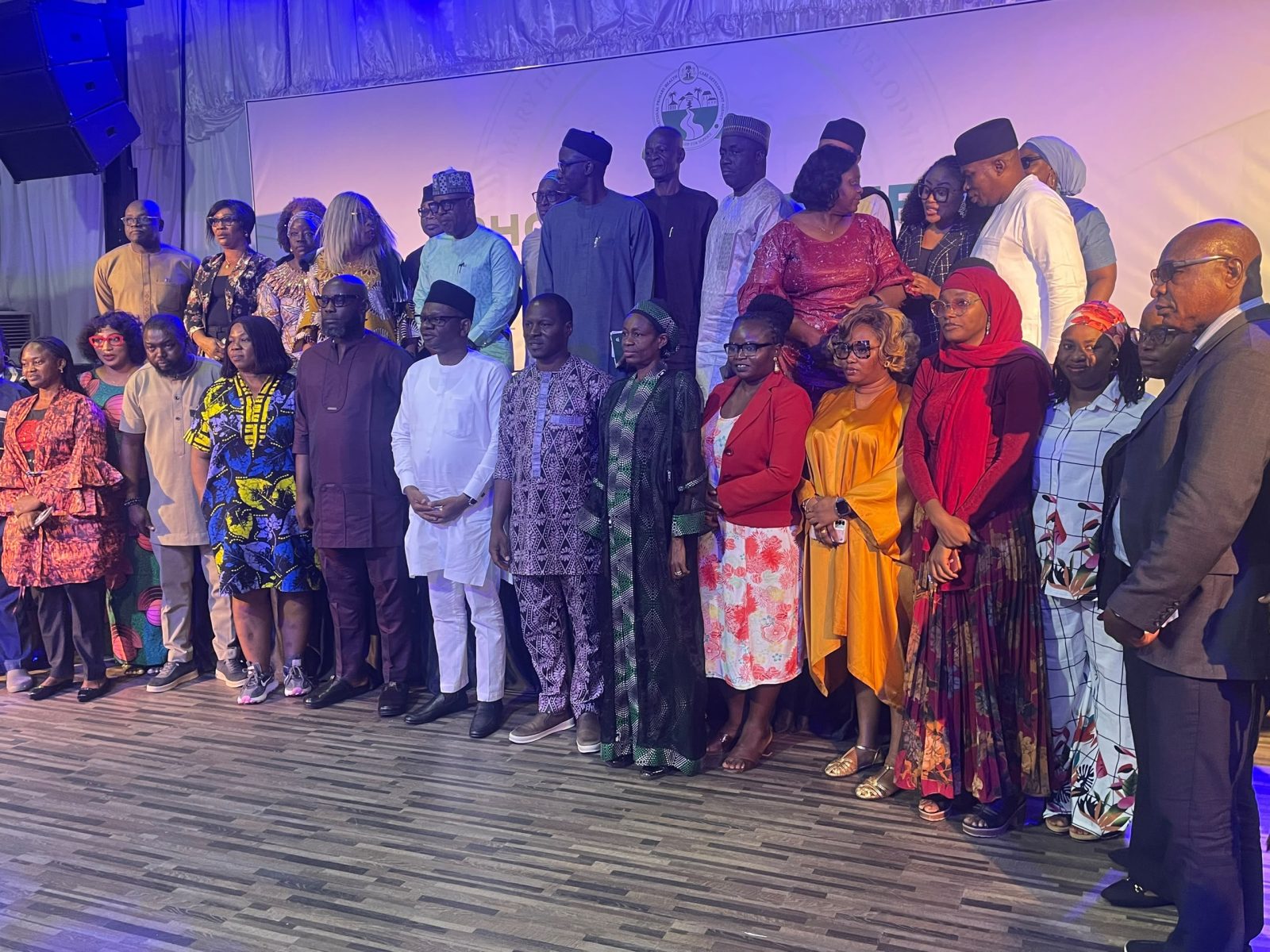
The Federal Government delivered the warning during a joint quarterly media briefing in Abuja convened by the National Primary Health Care Development Agency (NPHCDA) and the National Health Insurance Authority (NHIA) under the Nigeria Health Sector Renewal Investment Initiative, which is spearheaded by the Coordinating Minister of Health and Social Welfare, Prof. Muhammad Ali Pate, and the Minister of State, Dr. Iziaq Salako.
Executive Director of the NPHCDA, Dr. Muyi Aina, disclosed that the Ministerial Oversight Committee (MOC) granted formal approval to repurpose the Human Resources for Health component of the BHCPF as an enforcement tool to compel states to absorb health personnel on a pensionable, permanent basis rather than relying on precarious ad-hoc arrangements.
Under the Nigerian Constitution, the ownership, staffing, and day to day operation of primary healthcare centres fall squarely under the jurisdiction of state and local governments.
Aina declared that direct federal funding of clinic renovations and emergency hiring represents a one off “anomaly” born out of catastrophic systemic gaps, emphasizing that with increased post reform statutory revenues flowing to the federating units, states must immediately shoulder their constitutional responsibilities.
To enforce co-ownership, the agency has instituted stringent matching conditions that withhold federal intervention resources unless state authorities match the commitment by renovating three to four additional centres independently.
Nationwide, 4,434 primary health facilities are currently undergoing or have completed revitalization across all states and nearly every local government area, Of this figure, 3,526 facilities have been fully renovated and handed over to state and local authorities, while 908 remain under active construction.
Yet, national service readiness remains fragile.
Out of roughly 27,000 primary health centres actively tracked on the government’s live digital geocoded dashboard, only 53 percent currently operate at functional Level One or Level Two status.
Aina noted that Level Two facilities must maintain dedicated solar power arrays, reliable boreholes, and modernized sanitation.
He clarified that the Federal Government directly equipped only 500 of the revamped centres through the NPHCDA, with the remainder mobilized through state co-investments and development partners
On human capital, the agency has retrained more than 78,000 skilled birth attendants toward President Bola Ahmed Tinubu’s target of 120,000 frontline health workers, alongside 23,000 community based health workers being mobilized to reach remote populations.
These interventions have helped push quarterly primary healthcare patient volume from a baseline of 33 to 34 million contacts to as high as 46 million visits, led by high density states including Katsina, Kaduna, Kano, and Lagos.
First visit antenatal registrations rose from 1.6 million to 1.8 million per quarter, while fourth visit antenatal retention climbed 38 percent from 598,000 in 2023 to 830,000 in 2025.
Quarterly deliveries attended by skilled personnel also rose from 483,000 to nearly 700,000.
Concurrently, the National Maternal and Newborn Mortality Reduction Initiative (MAMII) has tracked 773,200 pregnant women across 10 focal states within 172 high burden local government areas in 34 states and the Federal Capital Territory, linking high risk pregnancies directly to emergency obstetric networks.
In a parallel nutrition effort, the First Lady’s National Community Food Bank initiative has deployed across six geopolitical zones, establishing 23 local food banks that have distributed over 9,500 food packages
On the financial protection front, the Director General of the NHIA, Dr. Kelechi Ohiri, announced that national health insurance coverage expanded by 32 percent, growing from 16 million enrollees in January 2024 to 23.02 million.
This pool includes 3.18 million destitute and vulnerable Nigerians whose premiums are fully subsidized through the statutory one percent Consolidated Revenue Fund allocation under the BHCPF.
In a major policy expansion, the MOC approved the integration of inmates within Nigerian correctional centres into the national health insurance framework, subject to facility accreditation and mandatory biometric National Identification Number (NIN) verification.
The authority has also eliminated out of pocket costs for Comprehensive Emergency Obstetric and Newborn Care across more than 270 accredited secondary and tertiary hospitals nationwide, directly reimbursing facilities for life saving interventions delivered to over 80,000 women, funding corrective surgeries for 6,000 obstetric fistula patients, and covering critical treatments for roughly 7,000 sick newborns.
To halt routine out of pocket extortion and hospital drug stockouts, the NHIA overhauled its decade old tariff structure effective April 1, 2025, doubling primary care capitation and increasing fee for service reimbursements by 373 percent to mirror real market costs.
Ohiri announced a strict “one hour rule” empowering hospitals to commence immediate emergency care at the NHIA’s expense if a Health Maintenance Organization (HMO) fails to issue a treatment pre-authorization code within 60 minutes
The insurance authority resolved 87 percent of enrollee complaints within 48 hours last year, sanctioned errant HMOs, and delisted defaulting hospitals while stationing permanent desk officers inside high volume health facilities to protect patients.
It has also partnered with rating agencies such as Agusto & Co to evaluate the financial solvency and service delivery risks of all accredited HMOs.
Ohiri noted that while the standard formal sector premium was adjusted to N38,000 annually to account for non-communicable diseases like cancer, diabetes, and hypertension, an essential primary package covering 70 percent of common health burdens remains accessible under the BHCPF at N15,000
The briefing concluded with an urgent public health alert regarding ongoing diphtheria outbreaks, with health authorities disclosing that clinical audits reveal 93 percent of infected children were completely unvaccinated or missed follow up doses due to persistent misinformation and zero dose gaps.
While routine immunization has reached 18.3 million adolescent girls with the human papillomavirus (HPV) vaccine, 102 million children with measles rubella shots, and 882,000 infants with the malaria vaccine across Kebbi, Bayelsa, Ondo, and Bauchi states, authorities warned that community vaccine hesitancy continues to undermine hard won health security gains.
Author









Leave a comment