











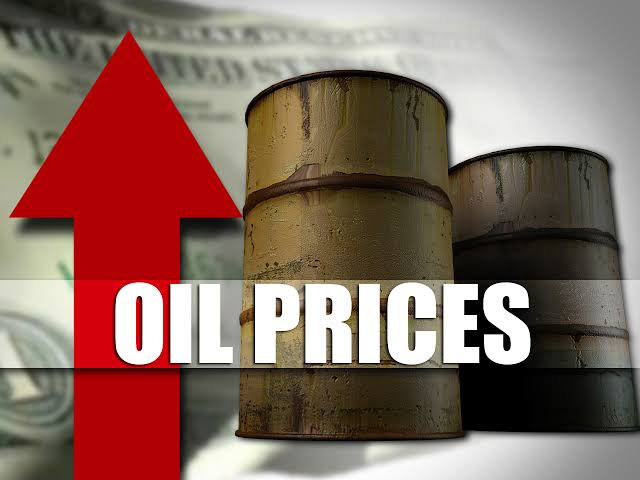




Crude oil rates experienced their first downturn since the Middle East hostilities erupted, sliding to $90 per barrel on Tuesday amid shifting market sentiments.
The international benchmark known as Brent crude recorded an 8.45 percent plunge to settle at $90 per barrel, while America’s West Texas Intermediate benchmark plunged 8.58 percent to close at $86.77 per barrel.
This price reversal followed high-level talks among European ministers exploring the option of tapping into strategic oil reserves to counteract the sharp upward swings that have gripped global energy markets in recent days.
US President Donald Trump proposed that “the war in the Middle East may end soon,” a statement that eased worries about extended supply disruptions, while he issued a blunt warning: “death, fire, and fury will reign upon them (Iran)” if they stopped the flow of oil within the Strait of Hormuz.
Responding directly to President Trump’s remarks—including his view that “the war in the Middle East may end soon”—Iran’s Islamic Revolutionary Guards Corps declared they would “determine the end of the war” and insisted Tehran would not allow “one litre of oil” to be exported from the region if US and Israeli attacks continued.
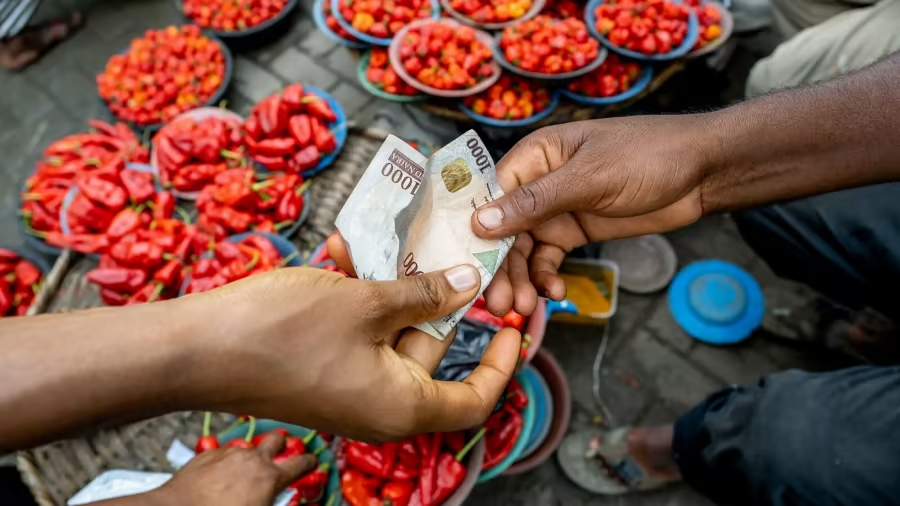
The broader conflict drawing in the United States, Iran and Israel has pushed international crude costs higher, triggering corresponding increases in petrol prices across Nigeria.
In its latest adjustment, Dangote Petroleum Refinery lifted the ex-gantry price of petrol by N180, taking it to N1,175 per litre.
On March 9, David Bird, the chief executive officer of the refinery, stated the plant was not immune to global oil shocks as it secures its crude on international benchmarks.
Persecondnews reports that the the Strait of Hormuz is a strategically vital, narrow sea passage between Iran (to the north) and Oman (to the south), connecting the oil-rich Persian Gulf to the Gulf of Oman and the Arabian Sea.
At its narrowest point, the shipping lanes are only about two miles wide in each direction, making it one of the world’s most important — and vulnerable — maritime chokepoints.
Nearly all crude oil exports from major Persian Gulf producers (Saudi Arabia, Iraq, UAE, Kuwait, and others) must pass through here, as do large volumes of liquefied natural gas (LNG) from Qatar.
Every day, roughly 20 million barrels of oil, condensates, and petroleum products flow through the strait — equivalent to about 20% of global oil consumption and 20–27% of all seaborne oil trade.
Around 70–84% of this oil heads to Asia (especially China, India, Japan, and South Korea), with Europe and other markets also depending on the route.
Author









Leave a comment