








Starting from 2026, the Federal Government plans to hand over several state-owned enterprises to private investors in strategic sales.
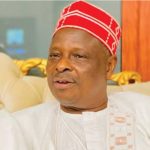
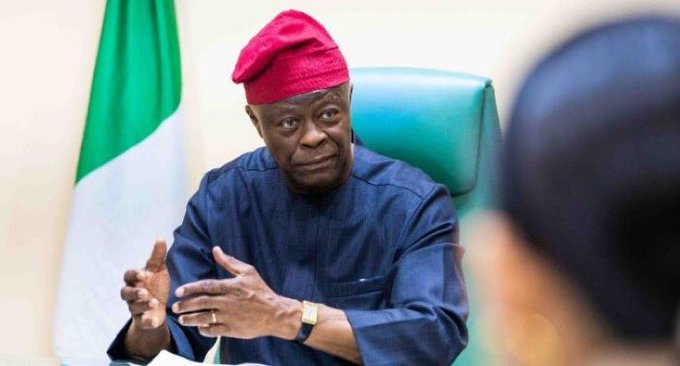
Finance Minister Wale Edun announced the move at the AlUla Conference in Saudi Arabia, explaining that the goal is to breathe new life into public assets while raising much-needed capital.
The government is currently “vetting” its list of assets to see what goes on the auction block first. It’s all part of a bigger plan by the Tinubu administration to slim down government involvement and prove to the world that Nigeria is open for serious business.
“The plan is to offer some assets in 2026,” Edun said.
He noted that preparatory work is already underway to ensure that the process is transparent, credible and attractive to investors.
“What we have put in place has made Nigeria very competitive in terms of the economic conditions and very attractive in terms of the incentives for investors. I think investors are now more comfortable investing in Nigeria,” he said.
According to Edun, the government is prioritising public-private partnerships as a key pathway to unlock value in national assets, reduce fiscal pressure on the state, and stimulate job creation.
“We are interested in public-private partnerships and the optimisation of our assets by having others come in and invest.”
The planned asset sales are anchored on a series of reforms introduced by President Bola Tinubu since taking office in May 2023, including the removal of petrol subsidies, liberalisation of the foreign exchange market, and broad-based tax reforms aimed at improving revenue mobilisation and narrowing fiscal deficits.
Edun said the reforms are beginning to yield results, citing moderating inflationary pressures, improved government revenues and relative stability in the naira as signs of strengthening macroeconomic fundamentals.
In addition to asset sales, the Finance Minister highlighted efforts to revitalize Nigeria’s energy sector via private partnerships.
This includes ongoing talks with foreign investors to overhaul state-owned refineries.
Officials are reportedly considering equity sales for these facilities, which have sat largely dormant for decades despite heavy government spending on maintenance.
This strategy follows a long-standing trend of privatization in Nigeria, notably the 2013 sale of power utilities and the 2015 divestment of the telecommunications giant, Nitel.
These efforts coincide with optimistic data from the IMF, which projects Nigeria’s economy to grow by 4.4% in 2026 (up from 4.2% in 2025), suggesting that these reforms could be the catalyst for a stronger growth trajectory.
Author







Leave a comment