











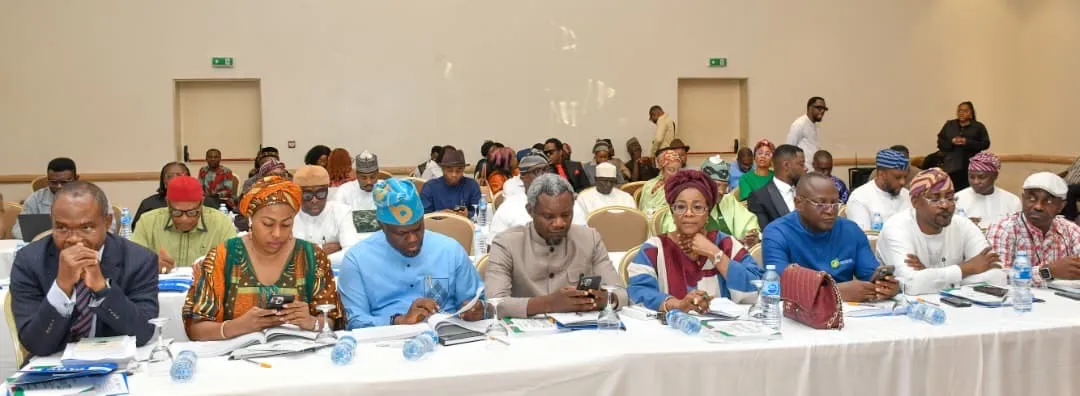



The National Assembly’s constitutional review process reached a critical milestone on Monday, November 24, with the final and decisive joint retreat.
The gathering, according to the lawmakers, serves as the last major deliberation before legislators vote on sweeping amendments set to redefine Nigeria’s governance structure.
Deputy Senate President Sen. Barau Jibrin, who chairs the Constitution Review Committee, emphasized the conclusive nature of the session.
Both the Committee members and the Speakers of State Houses of Assembly declared that the time for debate had ended, confirming that the next phase involves a historic vote on the Constitution alteration bills.
“Our meeting today will be less deliberative… the purpose is to approve positions reached previously.
“This is the last lap of this assignment. We must fulfil our promise to Nigerians that the Bills will be transmitted to the State Houses of Assembly this year,” he said.
Barau added that the retreat was deliberately structured to ensure state lawmakers are fully aligned before bills are transmitted to them.
He reminded participants that the Lagos retreat a month earlier had already resolved most contentious issues, leaving only the task of ratification and technical reporting.
Echoing the same urgency, Deputy Speaker of the House of Representatives and Chairman of the House Constitution Review Committee, Rep. Benjamin Kalu, said Nigeria had reached the turning point of the entire amendment cycle.
“Colleagues, let me be clear: this is the final retreat before the historic voting on the constitution alteration bills.
“After today, we move from deliberation to decision. We move from consultation to legislative action. We move from debate to delivery,” Kalu said.
He noted that the committee had already conducted six zonal hearings, three technical retreats, and consultations with governors, political parties, security agencies, traditional rulers, women’s groups, and civil society.
According to him, those engagements revealed overwhelming national demand for reforms that will:
“Devolve more powers to states, Guarantee local government autonomy, Strengthen state policing and internal security, Ensure credible elections, Deepen fiscal federalism, Expand gender representation.”
Both chairmen stressed that the fate of the amendments now rests heavily with State Houses of Assembly, which must approve at least two-thirds of the proposals before they become law, as required by Section 9 of the Constitution.
Kalu said: “The success or failure of this review will not be determined here in Abuja, but in the 36 State Assemblies. You are the gatekeepers of constitutional reform.”
The Deputy Speaker also announced that all governors would be briefed on Wednesday, a move aimed at ensuring state-level endorsement and avoiding political roadblocks.
“This is not to undermine executive authority,” he said, “but to strengthen federalism and deliver the democracy Nigerians deserve.
“History is watching us. Over 200 million Nigerians anticipate direction from this Assembly.”
He urged Speakers to return to their states as “ambassadors of reform,” while calling on federal lawmakers to seize their moment – “This is our moment. Let us rise to it.”
With deliberations concluded, sub-committee reports will be harmonized and taken to plenary sessions in both chambers for voting expected to be one of the most defining legislative exercises of the 10th National Assembly.
If the bills secure the required two-thirds approval in state assemblies, Nigeria could see sweeping constitutional changes before the end of the legislative year.
Author











Leave a comment