









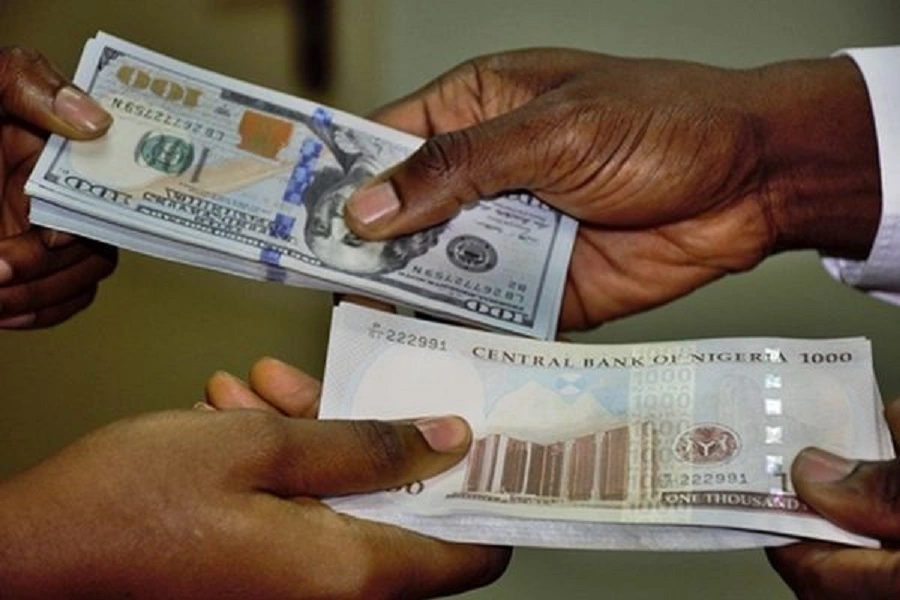



Nigeria’s foreign exchange reserves have surged to $41.00 billion, the highest in 44 months, according to figures published by the Central Bank of Nigeria (CBN) on its website.
This significant milestone marks a steady external accretion witnessed in recent weeks, with the reserves growing by roughly $81 million per day in August.
The reserves have staged a strong rally in August, adding about $1.46 billion month-to-date, from $39.54 billion on 1 August to $41.00 billion by 19 August.
This represents a 3.69% growth in less than three weeks.
According to the CBN website, the build-up began in earnest from early August, when reserves crossed the $40 billion threshold on 7 August, after closing July below $39.4 billion.
The CBN’s ability to stabilize the naira in the official market, manage liquidity, and defend against speculative pressure has been underscored by this sharp climb.
The year-to-date picture shows more modest gains, with Nigeria’s reserves opening the year at $40.88 billion on 31 December 2024.
At the latest print of $41.00 billion, this translates to an increase of about $124 million or 0.30%.
Most of the 2025 gains have been concentrated in the past five weeks, following a relatively subdued first half of the year.
The recent improvement is significant given the prolonged drawdowns that followed through 2022 and 2023, when reserves struggled to hold above $38 billion.
A robust reserve base plays a vital role in bolstering currency market confidence.
By enhancing Nigeria’s sovereign credit profile, it reassures investors about the government’s ability to fulfill external obligations, while also empowering the Central Bank of Nigeria (CBN) to effectively manage liquidity shocks and maintain financial stability.
The CBN has also reported sustained stability in the foreign exchange market, citing increased capital inflows, improved crude oil production, rising non-oil exports, and reduced imports.
Author










Leave a comment