












The Nigerian Senate has initiated a comprehensive investigation into the proliferation of Ponzi schemes across the country following the devastating collapse of Crypto Bridge Exchange, a digital investment platform accused of defrauding Nigerians of over N1.3 trillion.
This alleged scam is described as one of the largest financial frauds in the nation’s history.
Senators have attributed the surge in these fraudulent investment schemes to regulatory failures and weak financial oversight.
They warn that the widespread consequences, including an increase in suicide rates and a growing lack of public trust, now pose a significant threat to Nigeria’s social and economic stability.
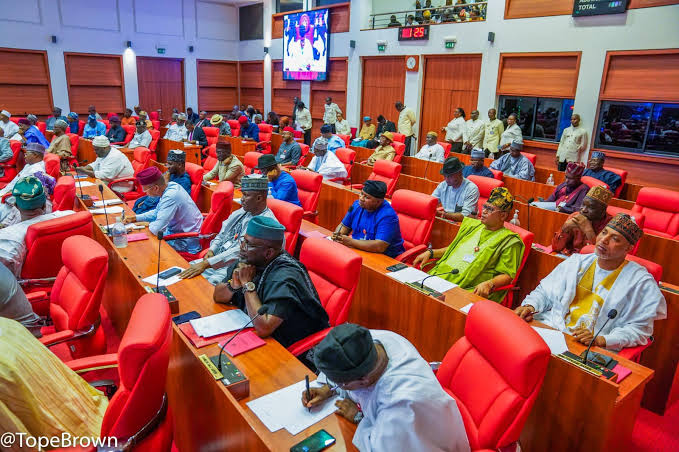
The motion to launch the probe, co-sponsored by Senators Tokunbo Abiru (Lagos East) and Osita Izunaso (Imo West), garnered unanimous support on the Senate floor.
Lawmakers from all political affiliations condemned the systemic shortcomings that allowed such platforms to operate unchecked.
Abiru, while presenting the motion, highlighted how CBEX exploited weak regulatory oversight by the Central Bank of Nigeria, the Securities and Exchange Commission, the Nigerian Financial Intelligence Unit, and the Economic and Financial Crimes Commission to lure millions of Nigerians into a financial trap.
Abiru, a former Managing Director of a bank, said: “Over N1.3tn was lost to CBEX alone. This is not an isolated case. It is part of a disturbing pattern dating back to MMM in 2016 and MBA Forex in 2020. Nigerians are being robbed repeatedly,”
He pointed out that the fallout includes depression, suicides, and a growing mistrust in legitimate financial institutions.
Sen. Tahir Monguno (Borno North) described the situation “alarming,” adding, “We must strengthen our laws and ensure offenders face the full weight of justice. Enough is enough.”
Supporting the motion, Senator Sadiq Umar (Kwara North) said institutions meant to protect the public have failed them, insisting “Regulatory bodies must wake up. People trust them to act—not sleep.”
“We are now seeing unlicensed fintech firms hiding under digital innovation. The CBN must tell us what safeguards exist and how many of these platforms are properly vetted,” Persecondnews quotes him as saying.
Sen. Abdul Ningi (Bauchi Central) urged the National Assembly to activate its constitutional powers under Sections 88 and 14 of the 1999 Constitution to compel accountability from regulatory agencies.
In his remarks, Senate President Godswill Akpabio recalled that he had once fallen victim to a failed Ponzi scheme in Port Harcourt, Rivers State, in the 1990s.
“History is repeating itself, only now with even more devastating consequences,” Akpabio said. “N1.3tn gone—just like that. This is an emergency. Families are ruined. Lives have been lost. We must act swiftly and decisively.”
He supported calls for public hearings and nationwide financial literacy campaigns, warning “We cannot sit back while Nigerians are being robbed blind. We must act to prevent more suicides, restore trust, and reclaim our economy from digital predators.”
The Senate resolved to initiate a comprehensive investigation into the digital financial sector, forming a joint probe involving its Committees on Capital Market; Banking, Insurance and Other Financial Institutions; Anti-Corruption and Financial Crimes; and ICT & Cybersecurity.
The lead committee is charged with conducting public investigative hearings and is expected to submit its report within four weeks.
This investigation will extend beyond the Crypto Bridge Exchange (CBEX) collapse, broadly examining Nigeria’s digital financial landscape to pinpoint systemic weaknesses and propose extensive legal and regulatory reforms.
Author







Leave a comment