



By Paul Ejime
Like ‘a thief in the night’ (not related to the Bible or the popular song), Togolese leader Faure Gnassingbé, on Saturday, 3 May 2025, completed a controversial constitutional reform which opponents and analysts see as the fulfillment of his life ambition for perpetuating himself in power and prolonging the Gnassingbé Eyadema dynasty.
Faure will be 59 on 6 June. He first seized power with the support of Togo’s military in 2005 following the death of his father, President Gnassingbé Eyadéma, who ruled Togo with an iron fist for 38 years.
The younger Gnassingbé has clung to power as President of the Republic through several flawed elections, including those denounced by civil society organisations and boycotted by the opposition.
On 3 May 2025, he took the title of President of the Council of Ministers, the country’s highest executive office, with no term limits.
To avoid any backlash, Faure Gnassingbé’s investiture for his new role was low-key, while the World focused on the burial of late Pope Francis and arrangements for the election of his successor by the college of Cardinals.
It was a seemingly innocuous but momentous shift with far-reaching implications on the Togo polity, from a presidential to a parliamentary system, through the controversial constitutional reform decreed in April 2024.
Under the reform, Gnassingbe’s original role of President of the Republic has become a ceremonial post, replaced by the President of the Council of Ministers, with sweeping executive powers.
To pave the way for his self-perpetuating agenda, Gnassingbe’s ruling Union for the Republic party (UNIR) won 108 of the 113 parliamentary seats in the country’s National Assembly last year.
The UNIR also gained 34 out of 41 Senate seats, after the main opposition parties boycotted the elections, which they dismissed as a sham.
Foreign reporters were not accredited to cover the elections.
The Togo constitutional changes were less than six months before the elections, in violation of the ECOWAS Supplementary Protocol on Democracy and Good Governance.
But surprisingly, ECOWAS did not publicly challenge the move, instead, the last summit of regional leaders named Faure Gnassingbe’s as one the mediators assigned to work for the return of the three Alliance of Sahel, AES countries that broke away from ECOWAS. The mediation is at best, faltering.
Ironically, Togo’s Foreign Affairs Minister Robert Dussey, on March 11, 2025, announced that his country could join the AES countries. That statement has not been refuted with critics questioning Togo’s fidelity and sincere commitment to the ECOWAS regional integration agenda.
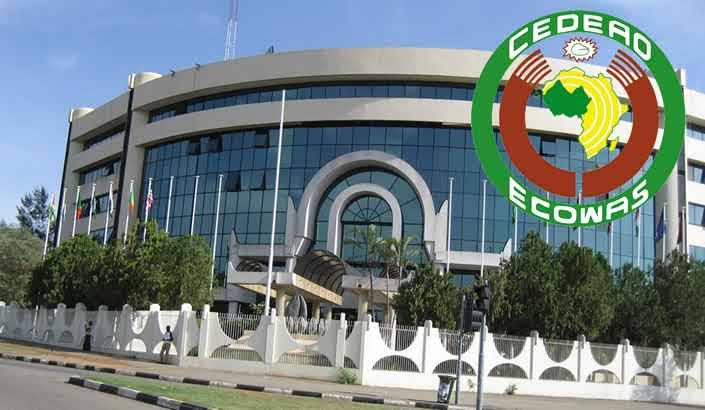
Incidentally, ECOWAS is marking the 50th anniversary of its establishment this year, with activities planned for Ghana, Togo and Nigeria, given the pivotal role played by Nigerian former Head of State General Yakubu Gowon and Togo’s late President Gnassingbé Eyadéma in the birthing of the regional economic bloc.
To confer a semblance of inclusiveness in the Faure Gnassingbé government reform, Jean-Lucien Savi de Tové, 86, a former Minister of Trade (2007-2009) and an opposition figure, was sworn in as Togo’s new President of the Republic, which under the new constitution is largely a ceremonial position, without any executive powers.
Critics and keen watchers of politics in Togo are in no doubt that the controversial constitutional reform was designed by Gnassingbé to extend his grip on power indefinitely, especially when his final presidential term under the old constitution approached its end in 2025.
Human rights, the media and opposition voices are stifled in Togo. Public protests are officially banned or met with government repression.
Professor Aimé Gogué, leader of the opposition Alliance for Democracy and Integral Development (ADDI), accused Faure Gnassingbé of pushing the constitutional changes to enable him to “rule for decades, unchallenged.”
However, now that Gnassingbé has apparently realised his long-term political ambition, what are the guarantees for democratic accountability, institutional legitimacy, or the future of opposition politics in Togo?
How can ECOWAS and the African Union respond?
Critics consider the Gnassingbé government’s actions as “constitutional/institutional and electoral coups.”
Will the “civilian coups” go unchallenged or without consequences, and how would the regional or continental organisations muster the moral authority to stop other countries that might follow the Togo example?
As ECOWAS battles insecurity, four Member States – Mali, Guinea, Burkina Faso and Niger – are now ruled by the military.
By August this year, the junta leader in Mali, Assimi Goiata, a former army Colonel who self-promoted himself to a General, would have been five years in power, and recently announced plans to rule for an additional five years unelected.
His colleague in Guinea, Mamady Doumbouya, another army colonel, who seized power in 2021 and elevated himself to General and President, also eyes a five-year transition period.
Doubtless, the same thought of power elongation must be running through the minds of the junta leaders in Niger and Burkina Faso, who have not made public their political programmes.
Meanwhile, ECOWAS and the Sahel regions remain a zone of instability buffeted by terrorism, violent extremism and separatist armed insurrections, with a high rate of unemployment, especially among the teeming young population and avoidable economic hardships.
In the case of ECOWAS, potential political hot spots include Cote d’Ivoire, where President Alassane Ouattara, 83, plans another election this year, for what critics consider his fourth term in office since 2011.
There is also Guinea-Bissau, whose President Umaru Embalo, recently threatened to expel an ECOWAS/UN mission from his country, having suspended the national constitution and dissolved parliament, leaving the judiciary and the Election Commission dysfunctional.
Sierra Leone is still battling the fallout from its disputed 2023 elections, and President Adama Barrow of the Gambia appears laser-focused on re-election in 2026, rather than governance or the ratification of a new constitution to end lingering problems from former President Yahya Jammeh’s 22-year dictatorship, which ended in 2017, with his exile to Equatorial Guinea.
The prognosis might look grim, with the rest of the World seized with various domestic concerns.
However, with proper diagnosis, Africans are those who can/will save Africa from self-inflicted and externally engineered problems. Citizens’ active participation/involvement and demand for accountability from civilian and military rulers will free the restive, otherwise rich but impoverished and badly managed continent from bad governance.
Happy Golden Jubilee Anniversary, ECOWAS!
Paul Ejime is a Media/Communications Specialist and Global Affairs Analyst
Author




Leave a comment