










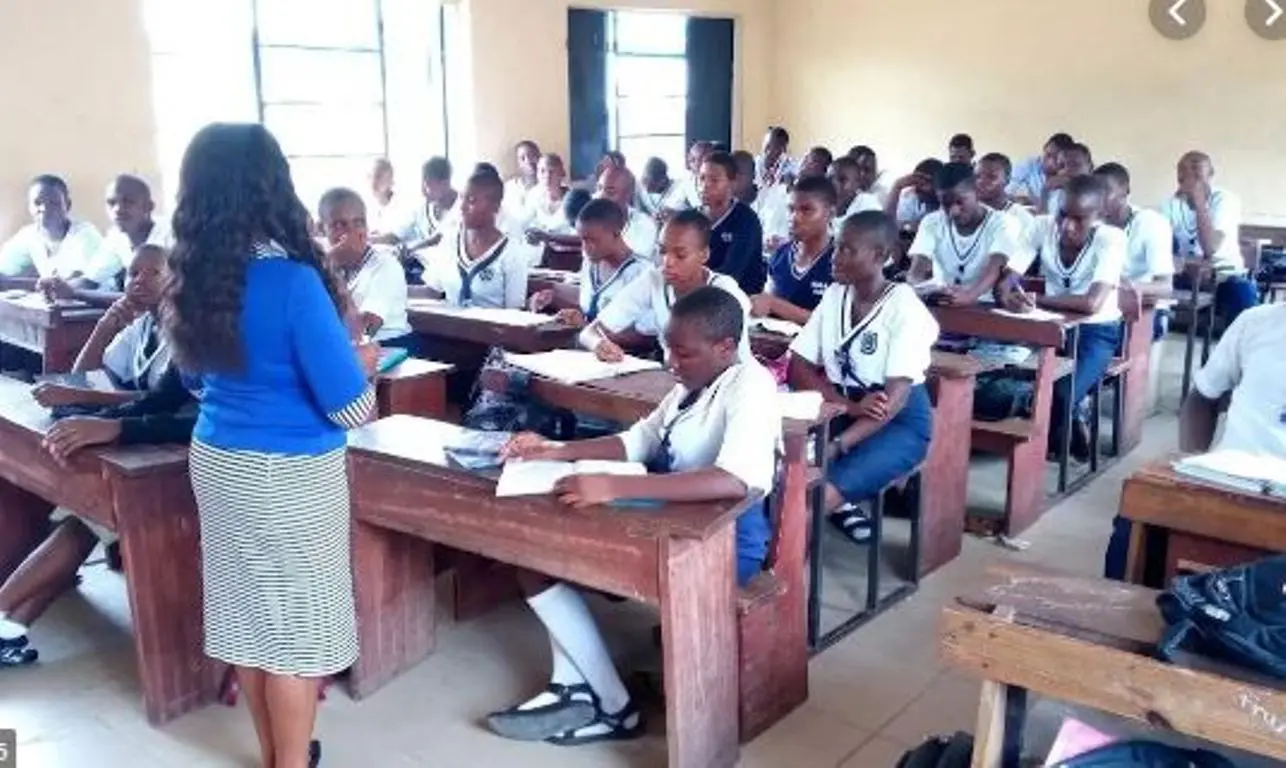




After 42 years of its introduction into the education system, the Federal Government is set to jettison the Junior Secondary School (JSS) and Senior Secondary School system in the country.
In its place, it introduced a compulsory 12-year uninterrupted basic education model after which a Nigerian child can aspire to higher education.
With this development, the Nigerian Government is seeking the abolition of 6-3-3-4 education system and replacing it with 12-4.
Persecondnews recalls that the 6-3-3-4 system was introduced in Nigeria in 1983. It was replaced by the 9-3-4 system, also known as the Universal Basic Education (UBE), in 2006.
The approval of the National Council on Education is also being sought to officially adopt 16 years as the minimum entry age requirement into the country’s tertiary institutions.
The Minister of Education, Dr. Tunji Alausa, disclosed this on Thursday in Abuja during the 2025 extraordinary National Council on Education meeting, the highest policy-making body in the nation’s education sector.
Commissioners for Education in the 36 states and the Federal Capital Territory (FCT), agencies and parastatals under the Ministry, and development partners are members.
According to the Minister, by subsuming secondary education into basic education, students will benefit from uninterrupted learning up to the age of 16.
Alausa said the new policy is in line with global best practices, pointing out that it will also reduce dropout rates by eliminating financial and systemic barriers that currently prevent students from completing secondary education.
He said: “Extending basic education to 12 years will ensure a standardized curriculum that is uniformly implemented across the nation.
“This will also facilitate early exposure to vocational and entrepreneurial skills, preparing students for both higher education and employment.
“Many developed nations have implemented similar systems where basic education spans 12 years, ensuring that students acquire foundational knowledge before specializing at tertiary levels.
“This reform also aligns Nigeria’s education system with international standards, fostering better educational outcomes and global competitiveness.”
He said it will also lead to economic and social impact, adding that educated youth contribute significantly to national development.
“When students receive an extended period of compulsory education, they are better equipped to join the workforce with relevant skills.
“This reform will also reduce child labor and other social vices resulting from premature school dropouts,” the minister stressed.
He highlighted the implementation strategies to successfully integrate secondary education into basic education to include: policy reforms, infrastructure expansion, teacher training and recruitment, funding and partnerships, curriculum enhancement.
Author












Leave a comment