









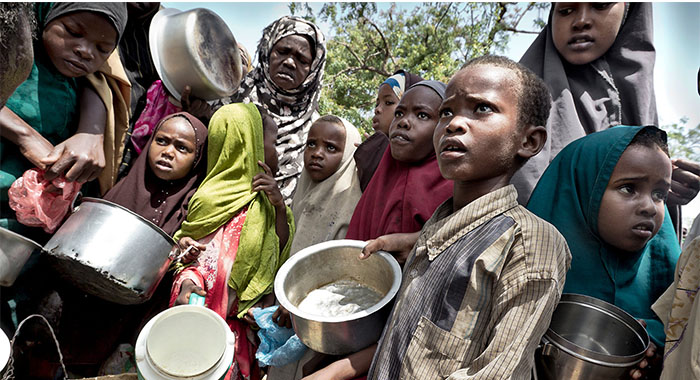



Hungry people in West and Central Africa including Nigeria may reach a staggering 49.5 million by August 2024, the United Nations World Food Programme (WFP) has disclosed.
The UN organization which made the disclosure in a statement on Tuesday, said despite considerable efforts by governments and partners, food insecurity continues to worsen in West and Central Africa.
According to the statement, acute hunger in West and Central Africa is mainly driven by conflict which has forcibly displaced millions of people from their homes and farms, the impact of the climate crisis, and high food and fuel prices.
“The prices of main foods remain well above the five-year average, particularly rice, corn, millet, sorghum, cassava and vegetable oil, despite seasonal declines in the prices of local commodities compared to last year.
“The trend is particularly worrying in coastal countries, where the number of women, men, and children facing acute hunger is expected to reach 6.2 million during the June-August 2024 hunger gap – a 16 percent increase on last year.
“The November 2023 Cadre Harmonisé analysis, projects cereal and tuber production throughout the region to be slightly above both last year’s levels and the 5-year average due to improved rains in 2023,” it said.
The WFP’s Acting Regional Director for Western Africa, Margot Vandervelden, said: “Acute hunger remains at record levels in the region, yet funding needed to respond is not keeping a pace. This is forcing WFP to scale back lifesaving assistance for those most affected in their hour of greatest need.
“Insufficient funding means the moderately hungry will be forced to skip meals and consume less nutritious food, putting them at risk of falling back into crisis or emergency phases, perpetuating the cycle of hunger and malnutrition.
“We need to break this circle by tackling the root causes of hunger and by building the resilience of families in West Africa.”
The statement added that the nutritional situation remains worrying, particularly in the Sahel, where emergency levels of child wasting were reached and surpassed in several countries this year.
“Notably in parts of Mali, north-west Nigeria and Burkina Faso, it added that this was due to fragile food systems which do not deliver the specific nutritional needs of women and children; limited access to basic social services; and poor care and hygiene practices.”
It noted that two out of three households in West and Central Africa cannot afford healthy diets, and eight out of 10 children aged 6-23 months do not consume the minimum number of food groups they need for optimal growth and development.
The UNICEF Regional Director for West and Central Africa, Felicité Tchibindat also said: “Children in West and Central Africa have a right to nutritious, safe, affordable and sustainable diets.
“We invest to prevent child malnutrition happening in the first place, but we also need funding to keep supporting government services for the early detection, treatment, and care of malnourished children to help them survive, recover, and go on to live healthy and productive lives with dignity.”
To address the spiraling food insecurity and malnutrition, FAO, UNICEF and WFP called on national governments and financial partners to prioritize programmes that strengthen climate resilient food systems and livelihoods and invest in social protection systems, as well as improve natural resource management, including water, as an accelerator of resilience and development.
“With the persistence of food and nutritional insecurity, we must act urgently to save millions of lives by advocating for the acceleration of resource mobilization to finance national response plans and facilitate access to areas facing insecurity or difficult to access, particularly in Burkina Faso, Mali, Niger and Nigeria,” the FAO Sub-Regional Coordinator for West Africa and the Sahel, Dr. Robert Guei, said.
The Cadre Harmonisé analysis also showed an estimated 94 million people in West and Central Africa under food security “stress” between October and December 2023, adding that if left without support, these communities are at risk of shifting to “crisis” and “emergency” levels of hunger tomorrow.
Author










Leave a comment