









By Femi Soneye
One of the most important virtues of leadership is courage. This quality more than any other, will determine whether a leader succeeds or fails in his mission.
Whilst vision is important because it outlines and encapsulates a leader’s plan and purpose, it may shipwreck in the stormy sea of public resistance if the leader lacks the courage to push it through. To succeed, a leader must stare down his demons and those of his people as he plods ahead toward his goal. To give in to fear or to be overawed by the weight of public opinion even when he knows that if he persists in his course society will be better for it, is to exhibit the highest form of irresponsibility.
At critical moments in a nation’s journey there arises the need for a leader to take decisions, which, though may appear unpopular to the mass of the people, ultimately ends up positively transforming their situation. We are at such a point in our country.
The last eight years have been challenging for the government and the people. A combination of events on the global scene-the implacable Covid 19 virus, which brought the world to its knees, global recession, and the ongoing Russia-Ukraine war, and some internal challenges like insecurity, oil theft and corruption, left the Nigerian economy reeling.
A key consequence of this was that millions of Nigerians were thrown into poverty with figures from the World Bank showing that a whopping 133 million Nigerians presently live in multi-dimensional poverty.
The challenges faced by the Nigerian economy by some of the developments mentioned above, were exacerbated by the channeling of trillions of Naira over the last eight years into servicing a regime of subsidy on petrol, which quite frankly, was an exercise in futility because instead of cushioning the effect of the hardship faced by Nigerians through reduction of the cost they pay for premium motor spirit, it ended up enrich a clique of marketers and other individuals operating in the downstream sector of the Nigerian oil and gas sector.
Through this practice, which by the way predated the immediate past government headed by Muhammadu Buhari, the Nigerian government unwittingly enriched these individuals whilst driving ordinary Nigerians deeper into poverty. In the twilight of his tenure, the Buhari government having taken cognizance of the negative cost of the subsidy regime to both the economy and Nigerians determined it must be brought to an end.
Consequently, it set June 30, 2023 as the terminal date for its removal.
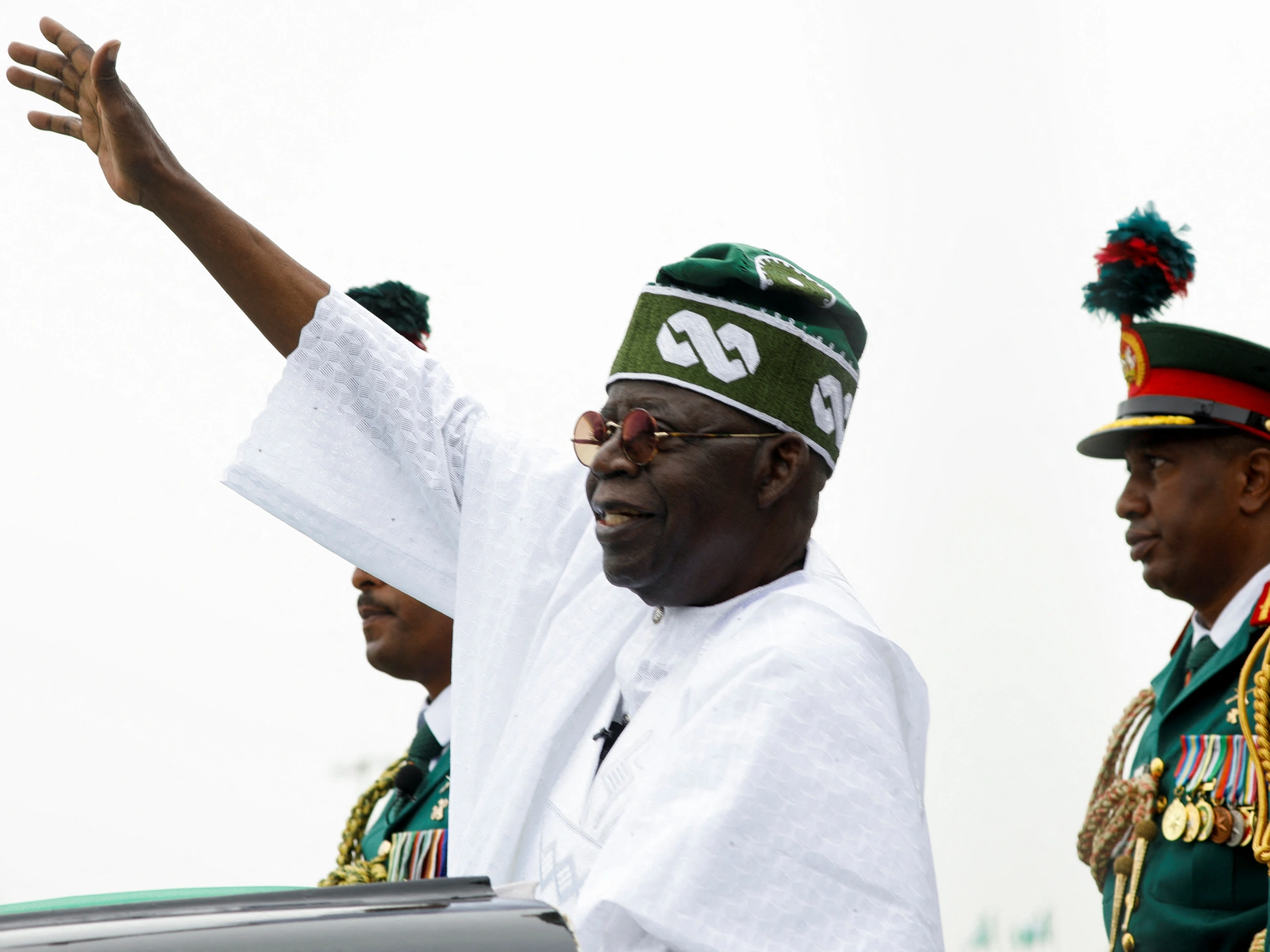
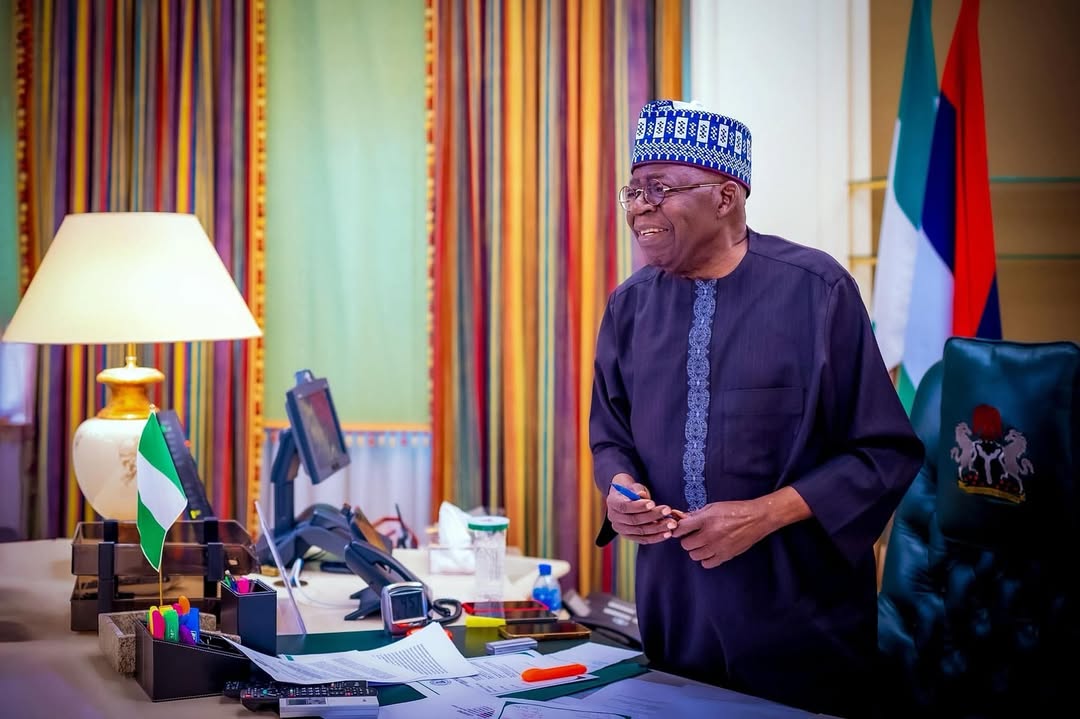
A new government is now in place. In his inaugural address, President Bola Tinubu who heads the new government, informed Nigerians of the development and as is typical of a lot of Nigerians some unpatriotic oil marketers have resorted to hoarding fuel in order to create artificial scarcity and ultimately hike the price of the product.
Expectedly, Nigerians are kicking and demanding that subsidy be re-instated. Labour unions and civil society organizations are threatening mass action among other measures. Its de javu all over again. We seem to have retreated eleven years back when the administration of Dr. Goodluck Jonathan on January 1, 2012, removed subsidy on petrol. Then, Nigerians instigated by opposition political parties and civil society organizations through mass rallies, blackmailed the administration into re-instating the removed subsidy.
The Tinubu administration should not fall into that same trap from which the Jonathan administration never recovered. As a leader with a vision to lead Nigeria to prosperity, Dr. Jonathan faltered because he did not have the courage of his convictions. At the critical moment he ought to exercise leadership, he balked, surrendering the high ground to opponents of his government.
It was Franz Fanon the revolutionary writer, psychiatrist and activist who admonished the elite many years ago that their role in society is essentially to bring succour to the people. He said:
“If any philosophy is here being preached, it is that man must not only exist but must live well; the measurement of any intellectual activity being the welfare of the people”
Nothing can be more straightforward about the task before President Tinubu. As a leader who has traversed the public and private sectors, he understands the necessity of evolving policies and programmes that not only open up the space for enterprise but one that equally ensures that even those without the predilection for engaging in business activities including those at the rung of society’s ladder, feel the impact of government whether in the rural or urban centres.
For someone who came into government on the mantra of renewed hope, he should understand that he owes it to millions of those who voted for him and the millions others who did not but who are citizens of the Federal Republic of Nigeria, to engender a system that enables them to flourish not one that asphyxiates them.
President Tinubu stands at the intersection of history. What he does at this very moment will determine whether he annexes a place in the pantheon of revered Nigerian leaders or he slides quietly into oblivion. Once again, we hear from Fanon who said:
“Every generation must out of relative obscurity, seeks to discover its mission and then fulfill it or betray it”.
Will President Tinubu cave into threats and blackmail and then continue the empowerment of a few unconscionable individuals who have for decades become leeches sucking at the soft underbelly of our fragile economy and in the process throw millions of Nigerians into poverty of the most abject kind or will he take a firm stand on the side of the Nigerian people who look up to him better their lives?
The loss to petroleum subsidy over the years has been humongous. It beggars belief that trillions sunk into the programme for years has yielded nothing but pain and misery to Nigerians. Blocking the drain pipe that subsidy has become will have a salutary effect on national finance and consequently, on the well-being of Nigerians. In the first place, removing it will free up resources for other sectors of the economy.
The government currently spends a significant portion of its budget on fuel subsidies, which could be better spent on education, healthcare, and infrastructure development. A simple analysis will reveal that the almost N12 trillion spent on subsidy in the last four years will be enough build 2,400, hospitals of 1000 bed capacity across the 774 Local Government Areas of this country or 500,000 new houses to provide shelter to over 3.5 million Nigerians, 27GW of electricity generation or skill up and provide education up to tertiary levels for over two million Nigerians.
The new price regime that the removal of subsidy will usher in will enable government focus on these critical sectors and free up scarce foreign exchange via the Central Bank of Nigeria (CBN) to be used in other sectors. This will reduce the macroeconomic headwinds caused by scarce foreign exchange.
Subsidy removal will also help in growing domestic refining capacity as it will help create a market reflective downstream, which invariably stimulates more downstream investments especially in the domestic refining space, thereby creating more jobs, prosperity and growth.
Also, removing subsidy will reduce smuggling and diversion of petrol by eliminating the unhealthy price arbitrage with neighboring countries thereby preventing the diversion and smuggling of gasoline outside our borders, which bleeds our economy.
Another key benefit of subsidy removal is that it will reduce the corruption surrounding internal product diversion as many marketers procure gasoline at subsidized regulated wholesale prices but still sell at deregulated retail prices.
Furthermore, the removal of subsidy will lead to resource rebalancing. Since the rich benefit more from the subsidy than the poor as they have higher number and capacity of vehicles to buy more gasoline removing subsidy will create an opportunity to redistribute this benefit directly to those who need it more.
Removing subsidy will also stimulate responsible consumption and reduce waste as the prices is more market reflective and the demand for the product will rebalance itself with the new price.
Another major important benefit of removing subsidy is that it will permanently banish queues from petrol stations across the nation and free the country from endless pains and sufferings that come with fuel scarcity. Nigeria will be saturated with petrol and there will be no diversions by the marketers.
There are other benefits of removing subsidy on petrol. They are:
• The cost-reflective or true pump price will help improve product availability and attract investments to the sector.
• Removing the subsidy will incentivize domestic refineries to produce more petroleum products, reducing Nigeria’s dependence on imported fuel. This, in turn, could boost the country’s economy and create jobs for Nigerians.
• The removal of fuel subsidy will strengthen the agricultural sector performance and outputs, even though prices will move up in the short term. The long-term benefits to the sector when funds are allocated to infrastructural and technological development will support overall growth and enhance food security in Nigeria.
• Subsidy removal will curb the greed for higher profits and sabotage by a few players in the oil industry which will positively affect the economy.
• Subsidy removal will ensure competition in the industry and market forces will reasonably drive down the price of petrol in the long run as witnessed in the telecoms sector for the benefit of Nigerians.
Clearly, the benefits of removing subsidy outweigh retaining it. Whilst there may be momentary pain, the long term benefits will banish the memory of the brief pain induced by it. Nigerians must look at the big picture instead of focusing on one spot on the portrait. In the Christian Holy Book, the Bible, there’s a verse (Romans 8:18), which says that, “the suffering of this present time is not worthy to be compared to the glory that shall be revealed in us”.
Nigerians should hold fast to this pithy admonition for truly if we stand firm and not given in to fear and other unhelpful nudging, all will be well in the end.
For President Tinubu and his people in government holding the mandate of the people is a sacred responsibility that ought not to be taken lightly. There is a deficit of trust in government, which accreted over the years following the failure of successive administrations to honour its compact with the people.
President Tinubu must rekindle that trust for it is only then that hope can be renewed in Nigerians.
Soneye, is the publisher of Per Second News.
Author







Leave a comment