















By Ajuma Edwina Ameh
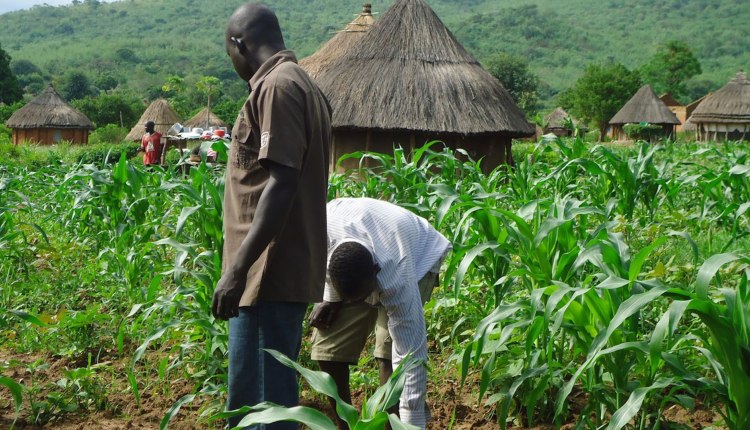
As part of efforts to improve the capacity and productivity of Nigerian farmers, the Nigeria Incentive-Based Risk Sharing System for Agricultural Lending (NIRSAL Plc) has so far trained more than 700,000 farmers across the country on field-crop production and soil management practices.
The non-bank financial institution, wholly-owned by the Central Bank of Nigeria (CBN) also announced that it has trained 2,600 mid-management and Agric desk officers of commercial banks.
NIRSAL disclosed that it has just concluded a series of training sessions under the NIRSAL Strategic Business Support Services (SBSS) which held in the six geo-political zones of the country.
According to NIRSSL Plc, the programme is a continuation of efforts targeted at achieving its key mandates which are de-risking of the agricultural value chain in order to encourage more investment in agribusiness by the financial sector.
It also include addressing its Technical Assistance pillar aimed at building the capacity of value chain actors for improved production, handling, processing and marketing of agricultural commodities.
The training sessions focused on ten commodities of Interest (COI) that have ecological and economic advantages in each region.
The commodities are Rice, Ginger, Maize, Fresh Fruit & Vegetables (FFV), Cassava, Beans, Aquaculture, Oil Palm, Livestock and Cotton.
According to the organization, the choice of the selected commodities was informed by the NIRSAL Agricultural Commodity Ecological Area (ACEA) map, which it developed and obtained validation from relevant research institutes.
“Consequently, in the Federal Capital Territory (FCT), the SBSS trained operators in the FFV Value Chain. The rationale for selecting FFV is hinged on the FCT’s urban consumer market. The training sessions took place in Kuje, Nyanya, Mararaba, Apo, Lugbe, the Municipal, Gwagwalada, Dei-Dei, and Abaji.
“In the South-South, the Rivers State SBSS focused on FFVs as well, in addition to Aquaculture. Stakeholders were trained in Rumuola, Wenpey, Aluu, Enekah, Elekahia, Eleme, Mgbuoba, Elelenwo, Igwuruta, Eliozu, and Rumuodomaya.
“In the South-East, focus was on the Rice and Cassava Value Chains. Rice, a commodity produced in every Nigerian state, was also under focus in the Rivers State SBSS exercise,” the statement, a copy of which was given to Persecondnews on Monday, said.
“Typical of states with large urban areas and high volumes of rainfall, another FFVs state is Lagos. Stakeholders were met in the Kosofe – Ikorodu, Iyana – Iba, and the Lekki – Ajah axes. In Ekiti State, across Ado-Ekiti, Orin Ekiti, Ijero, and Ogbese, Maize, Fish, Rice, and Oil Palm stakeholders, respectively, were met,” it explained.
Author








Leave a comment