



“These anti-media bills are the latest threats to freedom of expression, access to information and media freedom in the country. The bills are not in keeping with the provisions of the Declaration of Principles on Freedom of Expression in Africa, which supplements articles 1 and 9 of the African Charter”
After it secured the ECOWAS Court ruling against the President Muhammadu Buhari administration on the suspension of Twitter, the Socio-Economic Rights and Accountability Project (SERAP) has gone a higher step, writing the African Commission on Human and Peoples’ Rights in Banjul, the Gambia to intervene and stop the government and the National Assembly from passing two bills to gag the media.
SERAP, in a complaint addressed to the Chairperson of the Commission Mr Solomon Ayele Dersso, and Commissioner and Special Rapporteur on Freedom of Expression and Access to Information in Africa, Ms Jamesina Essie L. King, urged the commission to “issue provisional measures” to stop the bills currently receiving legislative action at the National Assembly.
Persecondnews had reported that a rancorous and protest-racked public hearing had been held with core media stakeholders calling for the shooting down of the bills which had scaled second reading at the plenary.
The two repressive bills are to amend the National Broadcasting Act and the Nigeria Press Council Act.
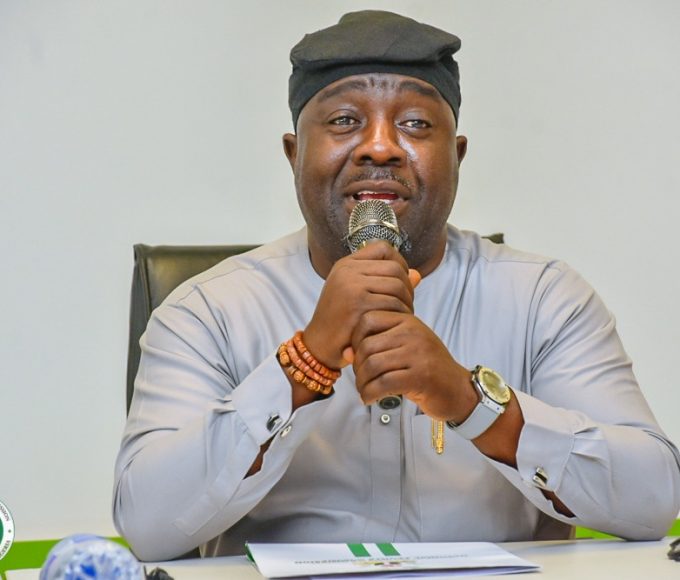
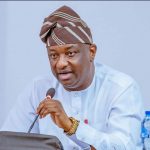
The bills are sponsored by the Chairman, House of Representatives Committee on Information, Mr Segun Odebunmi (PDP, Oyo State).
The bills seek to impose arbitrary and harsh punishment on journalists, broadcast stations, media houses and media practitioners.
SERAP said the complaint was brought pursuant to Articles 55 and 56 of the African Charter on Human and Peoples’ Rights and Rule 100 of the Rules of Procedure of the African Commission.”
In the complaint dated June 26, 2021 and signed by the Deputy Director, Mr Kolawole Oluwadare, SERAP said:
“The push by the Nigerian government and the National Assembly to support and pass the two anti-media bills is unlawful, as passing the bills would be contrary to the country’s obligations to respect, protect, promote and fulfil the right to freedom of expression, access to information and media freedom under articles 1 and 9 of the African Charter.
“These anti-media bills are the latest threats to freedom of expression, access to information and media freedom in the country. The bills are not in keeping with the provisions of the Declaration of Principles on Freedom of Expression in Africa, which supplements articles 1 and 9 of the African Charter.
“The Commission has the power to request Provisional Measures from the Nigerian government and National Assembly under Rule 100 of the Rules of Procedure to prevent irreparable harm and threats to human rights including freedom of expression, access to information and media freedom as urgently as the situation demands.
“The bills include retrogressive provisions that threaten human rights, including freedom of expression, access to information and media freedom, and could criminalize reporting and give the government overly broad powers and oversight over journalists, broadcast stations, media houses and media practitioners.
“If passed into laws, the bills would be used by those in power to intimidate and harass their critics, and to stifle freedom of expression, access to information and media freedom. The bills would have a chilling effect on the media thereby inducing some measure of self-censorship.
“Media freedom, which is an aspect of the right to freedom of expression, is now generally recognized as an indispensable element of democracy. The mass media promotes the free flow of information, which enables citizens to participate in a meaningful and informed manner in the democratic process.
“The actions by the Nigerian government and National Assembly are contrary to Articles 1 and 9 of the African Charter, and have thereby violated Nigeria’s positive obligation under Article 1 to recognise the rights, duties and freedoms and to adopt legislative or other measures to give effect to them.
“SERAP regularly relies on the media to carry out its mandate in the promotion of transparency and accountability and respect for socio-economic rights of Nigerians.
“The Nigerian government and National Assembly are directly responsible for pushing the bills that would gag the media and impose harsh punishment on journalists, broadcast stations, media houses and media practitioners in the country, action in violation of the African Charter, and therefore also in violation of Article 1 of the Charter.”
It added:“Nigerians, broadcast stations, media houses and media practitioners in the country face a real and immediate risk of violation of their rights to freedom of expression, access to information and media freedom if the anti-media bills are not urgently withdrawn.
“The Nigerian government and National Assembly have failed to produce any evidence that the two bills are necessary or lawful, and in the absence of such, SERAP asks the Commission to order the immediate withdrawal of the bills by Nigerian authorities.
“The media also serves as a watchdog by scrutinizing and criticizing public officials over the way they manage public affairs and public resources. In the performance of these functions, the media’s debate on public issues should be uninhibited, robust and wide-open. Speech concerning public affairs is more than self-expression; it is the essence of self-government.”
Insisting on press freedom in Nigeria’s 22-year democracy, SERAP stated: “A free press is the lifeblood of a healthy democracy, one in which journalists are both benefactors and beneficiaries of human rights and carrying out their professional duties to inform their communities and enable democratic participation.
“Individual journalists cannot do their jobs if the institution of the press is compromised or if the legal protections for that institution are subject to approvals by political authorities.
“The exhaustion of domestic remedies requirements set out in Article 56(5) of the African Charter has been met. There are no effective or sufficient local remedies available to the complainant.
“Nigerian courts do not entertain cases on the legality of anti-media and anti-human rights bills. Also, one of the lawmakers pushing the bills Mr Odebunmi Olusegun has reportedly boasted that ‘No court will stop us from passing the bills. Requiring SERAP to exhaust domestic remedies in such circumstances would be a mockery of justice.
“Under the bills, the National Broadcasting Commission can shut down TV and radio stations “in the public interest” and the press code must be approved by the Minister of Information. The overly broad definition of public interest opens the door for the Nigerian government to crackdown on freedom of expression, access to information and media freedom.
“The bills would also allow the Nigerian government to jail journalists, fine newspapers up to N10m naira ($20,000) or close them for up to a year if they publish “fake” news.
“Under the bills, journalists could be held liable for the offence committed by their organisations and can be made to pay heavy fines.”
Author





Leave a comment