











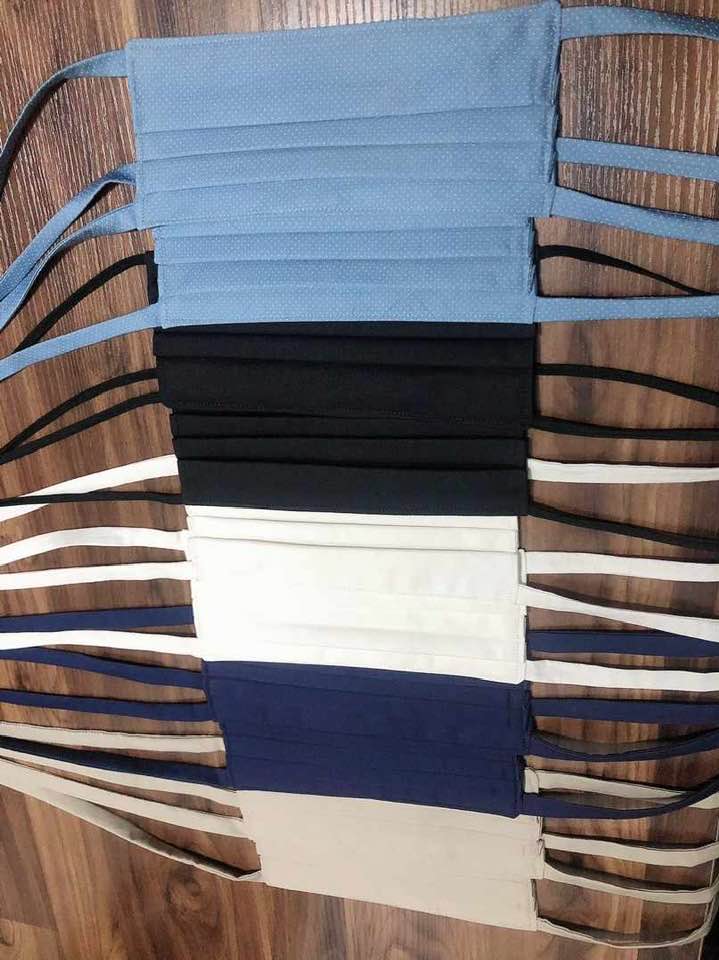



The World Health Organisation (WHO) has released new guidelines on the use of homemade or locally-made face masks for the prevention of COVID-19.
The guidance on homemade masks is important for preventing COVID-19 in low-income areas, WHO Regional Office for Africa in Brazzaville, Congo, said on Sunday via its official twitter handle.
Part of the guidelines is that the masks should be cleaned daily after use.
In a video posted on the twitter account, Guy Mbayo, the Technical Officer, Water, Sanitation and Hygiene (WASH), gave insights on how to clean them; how to wear and remove them, when to remove them, and much more importantly, how to manufacture them locally.
“WHO has recommended the wearing of medical masks; at the beginning of the crisis, there were not enough; supply chain was already disrupted.
“Member-states and governments have made wearing of face masks mandatory in their own countries; people were prompted to resort to homemade masks,’’ he said.
“The masks do not protect you fully; you still need to observe all the measures that were recommended like the hand washing with soap and water, and physical distancing.
“When you are removing the mask, don’t allow it to touch your hand; use the elastic to remove it without touching the mask itself,” he said.
Author







Leave a comment