













By Maryanne Awuya
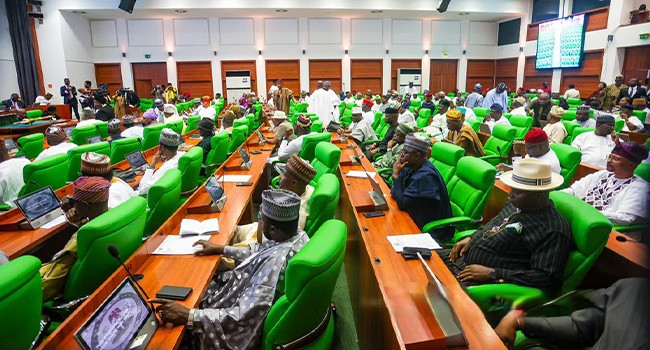
In a bold move to rescue the nation’s manufacturing sector, the Nigerian Senate is pushing for a complete ban on textile imports.
Lawmakers believe the restriction will boost job creation and help curb national insecurity.
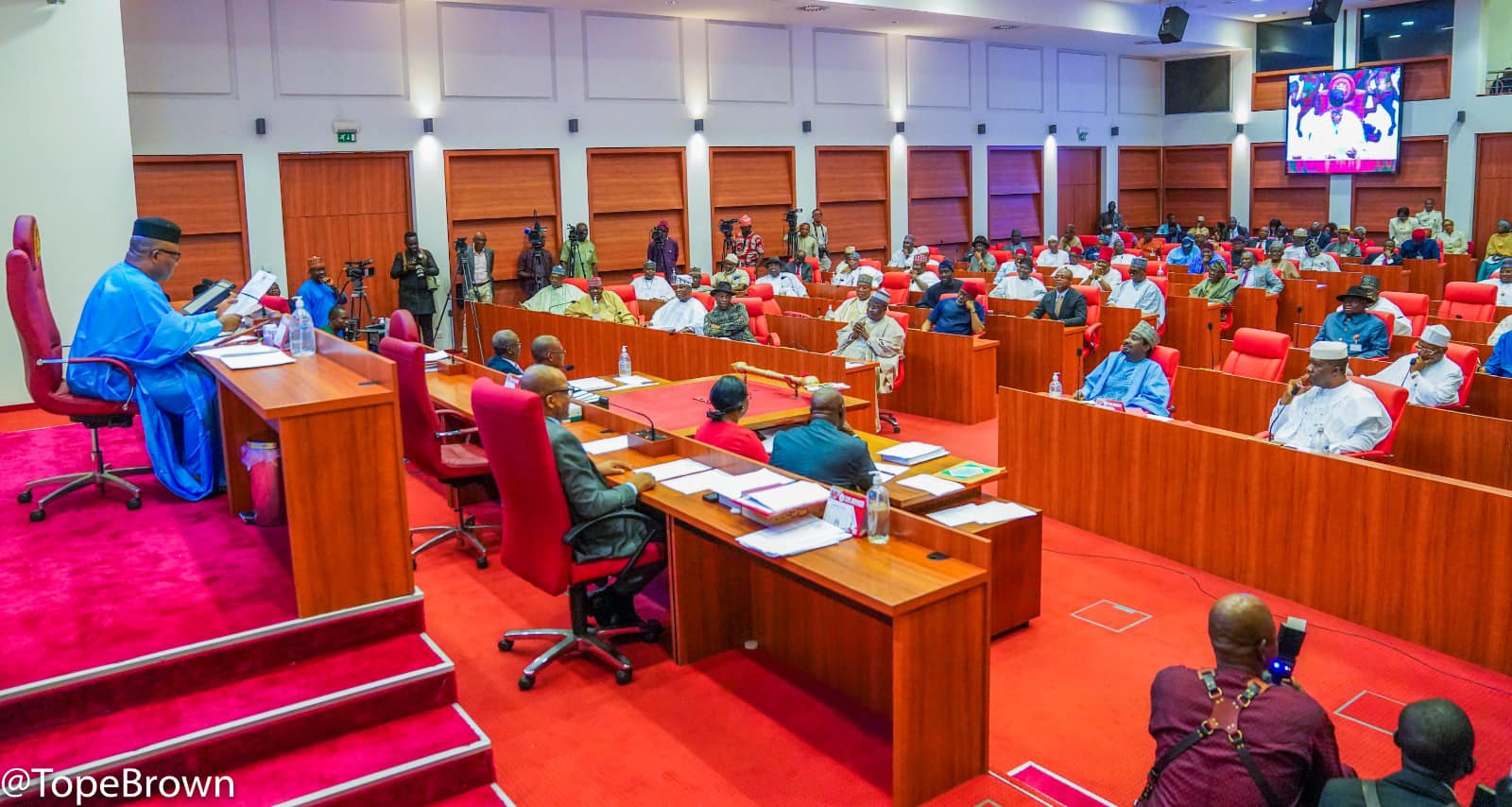
The decision followed a motion sponsored by Sen. Sunday Katung, alongside co-sponsors Senators Natasha Akpoti-Uduaghan, Adams Oshiomhole, Mohammed Tahir Monguno, and Ibrahim Khalid, titled “Urgent Need to Revive the Textile Industries in Nigeria.”
During the debate, Katung urged a return to self-reliance, reminding the chamber that Nigeria’s industrial roots date back to 1957, when Kaduna hosted the country’s first commercial textile mill.
Backed by robust post-independence policies in the 1960s and 1970s, the sector boomed to about 167 thriving mills employing nearly 500,000 citizens, which earned Kaduna the nickname “Textile City.”
However, structural adjustments, power deficits, and unmonitored borders caused a terminal decline in the late 1990s, leaving thousands of workers unemployed and the domestic market heavily dominated by foreign imports and smuggled goods.
Contributing to the debate, the lawmakers emphasized that border closures alone would fail without a structural overhaul of the domestic supply chain.
Senator Akpoti-Uduaghan warned that any serious revival plan must secure raw materials by aggressively boosting local cotton production inputs, while Senator Babangida Hussaini pointed out that obsolete machinery and decaying processing facilities remain massive roadblocks to global competitiveness.
To provide the necessary financial lifelines, Senate Chief Whip Mohammed Tahir Monguno urged the Central Bank of Nigeria to establish a dedicated intervention fund for the sector.
Supporting the economic argument, Senator Ogoshi Onawo noted that reopening these factories would directly combat youth unemployment by absorbing idle labor into stable agricultural and manufacturing ecosystems.
Senator Adamu Aliero further argued that an outright ban was the only definitive way to protect local investments and rescue cotton farming, noting that widespread smuggling and a lack of protective policies were what originally accelerated the collapse of Nigeria’s historic mills.
The Senate officially passed the resolutions, formally directing the Federal Government, alongside the Ministries of Agriculture, and Industry, Trade, and Investment, to draft an immediate framework for the sector’s recovery.
The upper chamber also demanded increased funding channels through the Bank of Industry to offer low-interest loans to local manufacturers.
Deputy Senate President Barau Jibrin described the status as a critical economic development stressing that urgent executive action is required to restore the textile sector’s massive potential contribution to the national economy.
Author









Leave a comment