













By Dr Adaeze Oreh
The global count of confirmed cases of COVID-19 has since passed the six million mark, close to half a million families have lost at least one member to the virus and numbers are escalating even in Africa. However, across parts of developing world, despite national and state-wide lockdowns, calls to shelter in place and public awareness measures, many people have been afraid, but not of what one would suspect – they are not scared of death by the novel coronavirus. Rather, they are frightened by the prospect of death from something not new in any way – hunger.
As the virus has raged on and world oil prices have nose-dived, worldwide economic indices have plunged, leading to escalating numbers of people driven into poverty and painful, gnawing hunger. According to the head of the United Nations’ World Food Programme (WFP), the world is on the threshold of a “hunger pandemic”. The WFP has predicted that the coronavirus could worsen acute food shortages and threaten up to 265 million peopleby the end of 2020. Similarly, a statement released by the Economic Community of West African States (ECOWAS) hints at the likelihood of the coronavirus pandemic increasing those at risk of food insecurity and malnutritionby almost 200% between June and August 2020. The pressing need for food has also been heightened by lean agricultural harvests, conflict, and insecurity.
In Nigeria, Africa’s most populous nation and a country which the World Bank ranks 152 out of 157in its Human Capital Index, up to 55.4%of the country’s youth population are unemployed or under-employed. That percentage has without a doubt increased in the face of this pandemic.
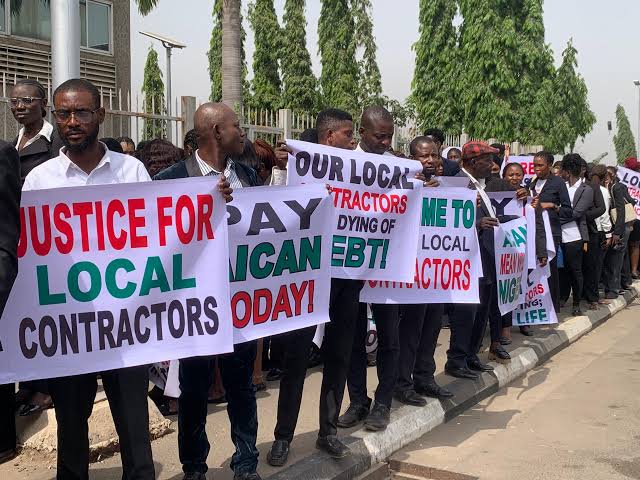
In the days preceding the lockdowns in major cities such as Lagos and Abuja, the fear was palpable as informal workers cried out, “When we don’t work, we don’t eat.” Whereas the informal sector had been shrinking across the world pre-COVID-19, this sector contributes up to 65% of GDPin countries like Nigeria, Benin, and Tanzania. With a perceptible halt in most economic activity since the pandemic, the danger of threatened livelihoods is clear and present for an awful number.
Public health measures such as lockdowns have benefitssuch as providing valuable time to organise the pandemic response, mobilise and equip health facilities, train health workers, effectively trace infected persons and their contacts, isolate and treat the sick and prevent community transmission. However, it became evident that without all the resources required to adequately provide interim palliatives for a huge segment of the population, lockdowns had to be eased to enable some level of economic activity and possibly avert chaos and anarchy from amongst those who do not have the luxury of “sheltering in place”. For the millions living in or on the brink of poverty, there is a high price for physical distancing, and this is a price they unfortunately cannot afford to pay at this time.
The World Health Organization (WHO) cites certain conditionsunder which lockdowns can be eased, and these include that transmission should be under control, robust health systems should be in place to detect, test, isolate, treat every case and trace every contact; risks should be minimised in health facilities by adequately equipping and training workers for personal protective equipment (PPE) use; importation risks should be managed and communities should be fully educated, engaged and empowered for the new normal. The question is how many of these conditions have been met or can be met given current resource challenges and demographics.
The reality of many developing countries especially in sub-Saharan Africa is that regardless of the above guidelines, hunger has undermined not only lockdowns, but other preventive measures such as physical distancing, compromised the quality of contact tracing, led to civil and social unrest, worsened insecurity and contributed to uncontrolled community transmission. In fact, it is not unlikely that the detention of individuals who flouted lockdown directives by law enforcement has contributed to the community transmission phase of the virus across some cities in Nigeria.
Given the peculiarities of countries in sub-Saharan Africa which are densely populated, have high rates of unemployment, have a large informal work sector, are prone to conflict and insecurity and have a high population of the vulnerable, public health safety and prevention measures cannot be expected to succeed unless accompanied by robust and innovative strategies to address social factors and humanitarian challenges such as hunger.
Providing social safety nets can never be a reactionary measure. As public health interventions are carefully considered, designed, and strategized upon, so also should the concomitant economic support packages. The process of implementation of palliative programmes, rapid and widespread coverage in addition to a vigorous communication strategy of the effort should all be carefully considered. In Northern Nigeria, the Kaduna State governmentworked with telecommunications companies to determine indicators for vulnerability, using the derived data to communicate instructions on how to access support directly with mobile phone users. While not every vulnerable person has access to a mobile phone, and certainly gaps will remain, this is an example of a good starting point and highlights the importance of data and technology in addition to the prospects of mobile money and fintech in this new world. This is the time for developing countries to ruminate on the institutional frameworks that exist or the lack thereof and determine to step out of the shadows and into the light.
The current situation also highlights the importance of a ‘One Health’approach to healthcare in which multiple sectors such as health, agriculture, water resources and environment all collectively communicate and collaborate to achieve better public health outcomes. This is especially relevant given the current global pandemic of COVID-19 and challenges to food safety and hygiene. Integrated health care systems were a critical success factor in Singapore’s fight against COVID-19 and one that many countries on the African continent would be remiss to ignore its potential. An integrated healthcare system leverages on capabilities developed in tackling diseases like HIV, tuberculosis, malaria and polio to strengthen the fight against COVID-19, enables more widespread testing, isolation and contact tracing and provides a platform for widespread PPE availability that would ensure continuity of patient care. Following the outbreak of COVID-19, Singaporeanswith respiratory symptoms were encouraged to seek treatment at any one of over 800 primary health clinics that provided subsidised healthcare, allowing for mild COVID-19 cases to self-isolate at home and reduce community transmission, while those with progressive symptoms were advised on how to access further treatment. One too many countries are currently paying the ultimate price for the historical neglect of primary healthcare.
Several key lessons have emerged from the response to COVID-19 in places such as New Zealand, Singapore, Japan, and Hong Kong. First, without a doubt, the integration of services in the health system and across other sectors amplifies the ability to absorb and adapt to shocks; second, the spread of fake news and misinformation is a challenge that must be actively and rapidly addressed daily; and lastly, the trust of patients, healthcare workers, and general society in government is critical to addressing health crises.
The COVID-19 pandemic has demonstrated clearly how tightly bound together population health and the economy are. Protecting human health cannot occur without the due consideration of other determinants of health – food, water, hygiene, sanitation, and the economy. Therefore, in the words of Alexandre Dumas, it must be, “All for one and one for all”. Indeed, the reality is that for millions of people living in poverty who struggle daily to feed themselves and their families, “Food is more important than corona.”
Dr Adaeze Oreh is a family physician in Abuja and a public health expert. She is also a Senior Aspen New Voices Fellow with the Aspen Institute in Washington D.C.












Leave a comment