







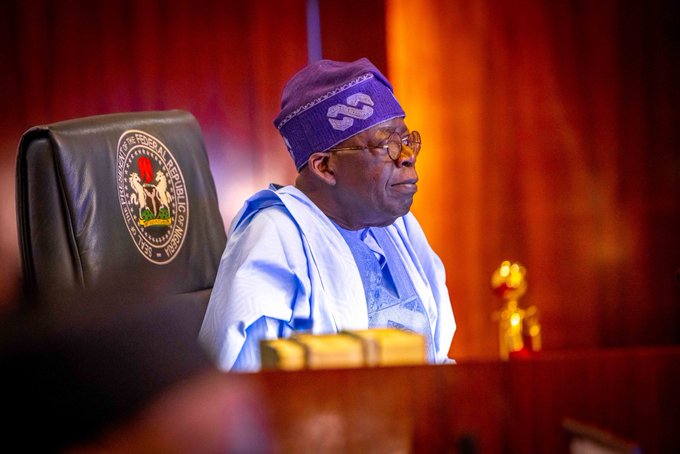



President Bola Tinubu has approved the comprehensive overhaul of Nigeria’s educational system from primary to tertiary level, with the aim of improving learning and skill development.
It is also to increase enrollment and ensure the security of the nation’s children.
Persecondnews reports that Nigeria, with a GDP of $477 billion as the largest economy in Africa, is in the 12th position among nations with the best educational system in Africa in 2023, according to a Bscholarly.com report.
“An unpleasant record that Tinubu’s administration will want to rewrite, considering the fact that education is a key ingredient in economic growth,” Tinubu said in a statement by Chief Ajuri Ngelale, a presidential spokesman said.
“President Tinubu establishes a national education data system and approves skill development for all levels of education, teachers’ training, and support nationwide.”
Tinubu premised Thursday’s system-wide policies on “a paucity of coordinated, verifiable, and authentic data on all aspects of the education sector in Nigeria, which is critical for planning.”
The United Nations International Children’s Emergency Fund says one in five out-of-school children in the world are in Nigeria.
A total of 10.2 million out-of-school children are at the primary level, and 8.1 million are at the junior secondary school level, amid banditry, multidimensional poverty, and the rising cost of living.
Tinubu, however, stated that DOTS, an acronym for Data Repository, Out-of-School Children Education, Teacher Training and Development, and Skill Development and Acquisition, captures the approved policies.
The information is expected to guide federal and state interventions for teachers’ training and development as well as overall support.
It will also provide data on gender ratio (boys and girls), their specific learning needs, and who is in school or who has dropped out based on daily monitoring and year-by-year reporting.
The presidency also announced the creation of a dedicated portal/dashboard in the Federal Ministry of Education, offices of state governors, and local government chairpersons, which will host and disseminate this information for the federal government, states, and local governments to monitor in real-time.
This new data tracking architecture will enable the government to track the progress of students, thus having a clear data-driven mechanism for interventions, especially concerning out-of-school children, girls, and those with specific learning disabilities, among others,” it said.
On out-of-school children’s education and training, he highlighted ongoing efforts by the Federal Ministry of Education, which it said is implementing the government’s policy through the activities of four of its agencies.
Tinubu said: “Already, there are about two million beneficiaries. The system-wide policy will further enhance the education and training of the nation’s out-of-school children.”
On teachers’ development and support, the Presidency said the Education Ministry will support and train teachers in digital skills to facilitate the use of technology in classrooms.
“This is expected to bring technology and digitization to teachers and learners at all levels of education.”
The statement also emphasized skill development and acquisition for all levels, saying the President has also approved the National Skills Framework.
The framework is expected to enhance skill diversity in the education sector to effectively equip Nigerian students with the requisite skills, knowledge, and values to become functional and productive members of society.
According to the Presidency, the NSF is designed to “provide the appropriate skills for each level of education that will result in the empowerment of generations of Nigerians with the required aptitude for the evolving needs of the global economy of the 21st century.
“This framework is expected to address skill gaps, quality of education, and unemployment concerns as students will acquire certain skill sets in addition to general knowledge.”
It assured Nigerians that once fully implemented, these programmes will succeed in resetting learning and connecting the ‘DOTS’ for significant improvement of the overall education system in Nigeria, in line with President Tinubu’s Renewed Hope Agenda.
Author




Leave a comment