















By Maryanne Awuya
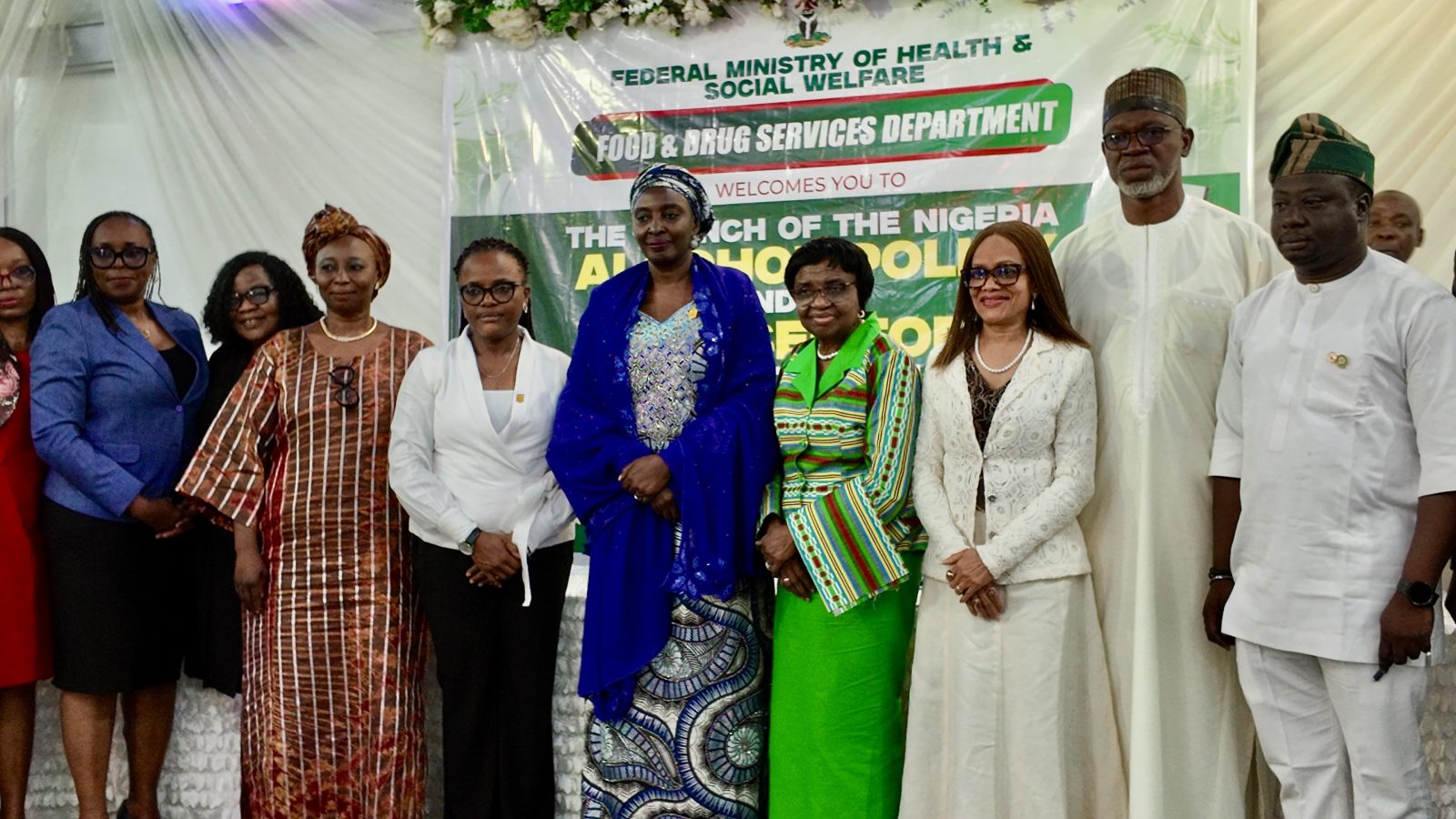
Major government agencies and stakeholders have thrown their weight behind the newly launched Nigeria Alcohol Policy and its Multisectoral Implementation Plan 2026–2030, pledging stronger collaboration to reduce alcohol-related harm and ensure effective implementation.
Speaking at the official launch in Abuja on Thursday, representatives of the National Assembly, NAFDAC and the Nigeria Police Force said their institutions would support the policy through regulation, enforcement and coordinated action.
Representing the Senate Committee on Health, Irene Ominike Odibaba, said the National Assembly welcomed the policy and was ready to support its implementation.
Odibada commended the Federal Ministry of Health and Social Welfare for introducing the policy, noting that the National Assembly was pleased to support the initiative.
Director-General of NAFDAC, Prof. Mojisola Christianah Adeyeye, also reaffirmed the agency’s commitment to driving the policy through science-backed regulation, continuous surveillance, and active stakeholder engagement.
She said the policy provides a national framework for regulating the production, distribution, marketing and consumption of alcohol, with particular emphasis on protecting young people and other vulnerable groups.
Adeyeye highlighted NAFDAC’s ongoing enforcement against alcoholic beverages packaged in sachets and containers below 200ml, noting that manufacturers Association of Nigeria (MAN) had recently signed an undertaking to discontinue the production of such products.
“We reaffirm our commitment to contributing our quota to achieving the shared vision of a healthier, safer and more productive Nigeria through science-based regulation, effective monitoring and surveillance,” she said.
Police Inspector-General Tunji Disu said the Nigeria Police Force participated in the processes leading to the development of the policy and was prepared to support its implementation.
He assured legitimate producers that the police would provide a safe and secure environment for businesses operating within the law, but warned that companies must comply with the policy and relevant regulations.
“You can look up to the police to provide a safe and secure environment for you to do your business,” Disu, represented by a senior officer Akpang Usunayese.
According to him, businesses that violated the law would face the necessary enforcement measures.
He also urged Nigerians to drink responsibly, stressing that the police would monitor compliance with the provisions of the policy.
Director, Narcotics and Drug Abuse Division, Federal Ministry of Health and Social Welfare, Henrietta Bakura-Onyeneke, a Pharmacist, said successful implementation would require active participation from government, the private sector, civil society, development partners, professionals, the media and communities.
She noted that the policy provides a coordinated framework for addressing alcohol-related harm while supporting responsible economic development.
Bakura-Onyeneke urged stakeholders to move the policy from a document to concrete action, particularly in prevention, treatment, rehabilitation, regulation and surveillance.
“The success of this policy depends on our collective efforts,” she said, calling for stronger collaboration among stakeholders to create a healthier, safer and more productive Nigeria.
PerSecondNews reports that the event brought together representatives of several Ministries, Departments and Agencies, including the Federal Ministry of Industry, Trade and Investment, Federal Ministry of Finance, Federal Ministry of Environment, Federal Ministry of Youth Development, Federal Road Safety Corps, National Drug Law Enforcement Agency, Association of Local Governments of Nigeria, Manufacturers Association of Nigeria, World Health Organisation and other development partners.
The Nigeria Alcohol Policy 2026–2030 is aimed at balancing the legitimate economic contributions of the alcohol industry with measures to reduce alcohol-related health and social harm.
Author











Leave a comment