








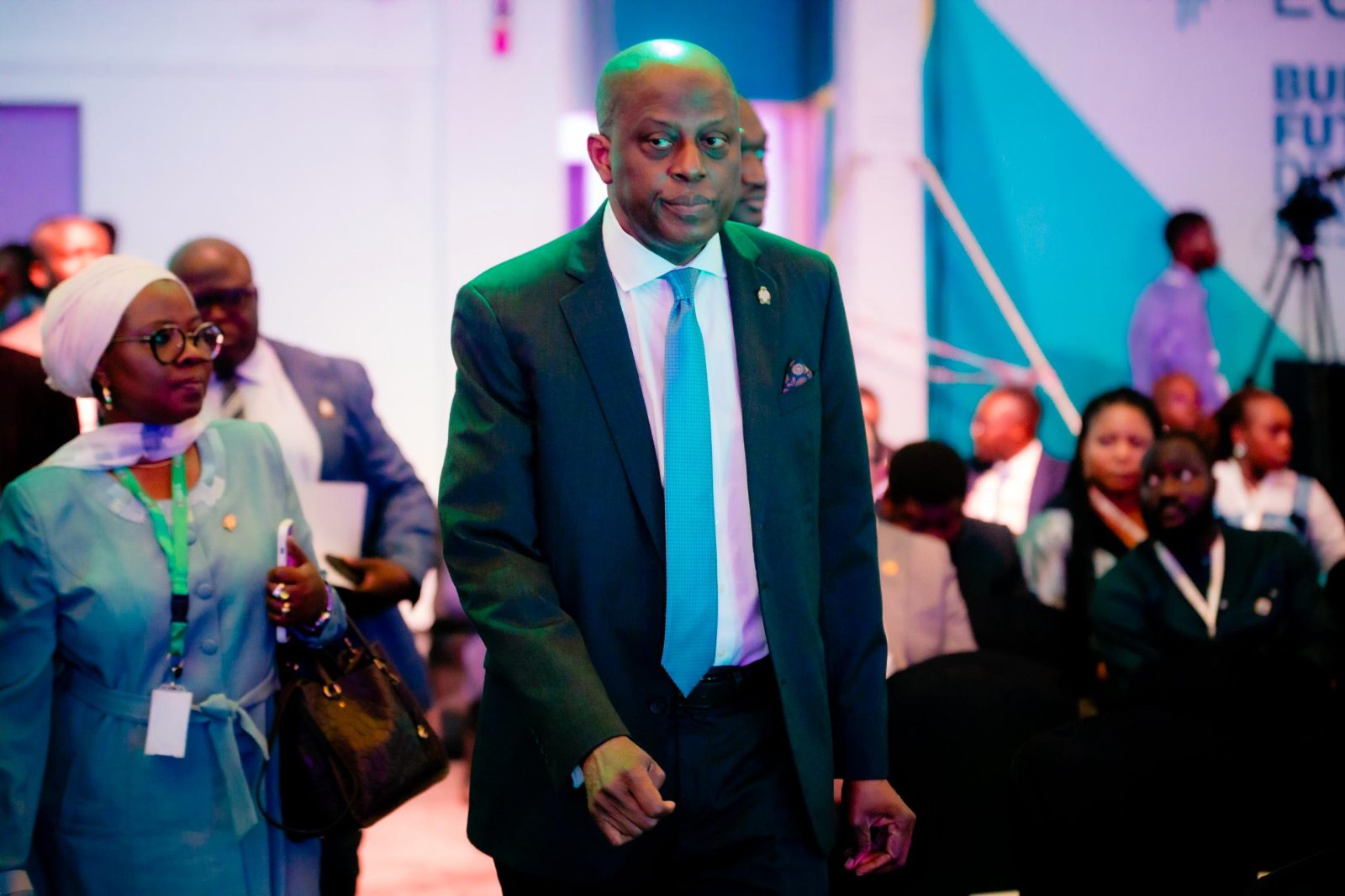


Using its constitutional powers, the House of Representatives on Wednesday summoned the Governor of the Central Bank of Nigeria (CBN) to explain the missing N16 trillion.
The House invoked specific rules (Order 19, Rule 1 and 2) to demand an accounting for the unremitted funds.
The CBN Governor must appear before the House Committee on Public Account on Tuesday, December 16, to detail why the revenues were not paid and to outline a firm strategy for the immediate remittance of all outstanding balances to the Federal Government.
According to the motion filed by Committee Chairman Rep. Bamidele Salam, the apex bank is accused of failing to remit two categories of funds: over N5 trillion in operational surplus and N11 trillion in government revenue.
He reminded members of the strategic and statutory role of the Central Bank in the administration of the Remita Revenue Collection System established pursuant to the Fiscal Responsibility Act, 2007, Central Bank of Nigeria Act, 2007, the Constitution of the Federal Republic of Nigeria, 1999 (as amended), and other extant fiscal and financial management laws of the Federation.
Salam said under the Fiscal Responsibility Act, 2007, the Central Bank of Nigeria Act, 2007, the Finance Act, 2020, and the relevant subsidiary legislation, the Central Bank of Nigeria is mandated to collect, account for, and remit all Federal Government revenues accruing through the Remita platform into designated Government accounts in a transparent, efficient and in line with regulatory standards.
He disclosed that the Public Accounts Committee (PAC) is duly empowered by Sections 85(5), 88, and 89 of the 1999 Constitution, as well as Order 20, Rule 6 of the Standing Orders of the House to consider the Auditor-General’s Reports and to conduct investigations into the general and specific areas of Nigeria’s public financial management.
Salam said in the course of the ongoing investigation by the Public Accounts Committee into the Auditor General’s Report of the 2022 financial year and the administration of the Remita Revenue Collection System by the Central Bank of Nigeria, covering the period from 1 March 2015 to 30 April 2016, the Committee uncovered various infractions.
He said the committee discovered “the CBN undisputed liability of N5.2 Trillion, in unpaid operating surpluses due to the FGN for the years ended 2016 to 2022, which has remained unremitted to date; refunds of Collected Charges by the Central Bank of Nigeria. (a) Amount collected by the Central Bank of Nigeria: N954,302,576.67, (b) Amount Refunded by the Central Bank of Nigeria: N0.00; c) Difference/Variation N954,302,576.67; (d) computed Interest at Monetary Policy Rate (MPR) of 27.25%: N2,329,027,728.92” (e) Total Amount Due for Refund: N3,283,330,305.05.
‘Discrepancy in Total Collections Claimed by the Central Bank of Nigeria: (a) CBN Claim of Total Collections (as per data submitted): N8,736,481,203.58; (b) PAC-Computed Central Bank of Nigeria Collections (from the same data): N19,834,886,731.77; (c) Difference/Variation: N11,098,385,528.19.
“Missing Balance Take-On on Central Bank of Nigeria Core System.”
He said further that the committee discovered a migration discrepancy amounting to N2,686,325,119,825.10 being outstanding and payable to the Federal Government’s Assets Recovery Account.
Salam expressed concern that “cumulatively, the Committee has uncovered that the Central Bank of Nigeria is indebted to the Federal Government of Nigeria in the sum of over N11 trillion, arising from the foregoing infractions and discrepancies.
“Despite several formal communications and invitations extended to the Governor of the Central Bank of Nigeria by the Public Accounts Committee to appear, provide explanations, and remit the outstanding amounts into designated Government accounts, the Central Bank of Nigeria has failed, refused, or neglected to honour the invitations or effect the required remittances as directed by the Committee.
“At a time when the nation is confronted with acute revenue shortages, heightened insecurity, and pressing developmental needs, the prompt recovery of all Government funds is critical for national stability and economic sustainability.
“The constitutional mandate of the Legislature to provide oversight over public finances and to safeguard the assets and revenues of the Federal Republic of Nigeria.”
Persecondnews reports that the motion elicited heated disagreement from members on the mode to approach the issue, leading to a rowdy session and making the House uncontrollable.
While some members wanted the CBN governor invited to address the whole House at plenary, Rep. Ghali Mustapha (NNPP, Kano) suggested the setting up of an ad-hoc committee comprising relevant committees of the House, while Rep. Ahmed Jaha (APC, Borno) believed that the matter should be referred back to the Public Accounts Committee.
Jaha argued that taking the matter away from the Public Accounts Committee will affect the confidence of other committees that may have similar reports, while giving heads of government agencies more confidence to disregard invitations from the House.
Rep. Sada Soli (APC, Katsina) said the President should take special notice of the information contained in the report, considering the fact that it was brought to the House by a constitutional committee headed by a member of the opposition.
He asked the House to invoke order 19 of its standing order and summon the CBN governor to appear, failing which, the House will take appropriate actions.
Speaker Tajudeen Abbas, who presided over the plenary, was, however, not happy with the rowdy nature of the House, cautioning that their actions were unparliamentary, warning that they would refer members to the House Committee on Ethics.
He said members cannot achieve anything by shouting, adding that those who were not in support of referring the matter to the Public Accounts Committee were free to vote against it.
In a voice vote that sounded equal, the House resolved to refer the matter to the Public Accounts Committee, while asking the CBN governor to appear before the committee unfailingly on Tuesday, December 16.
Author





Leave a comment