











By Joycelyn Ellakeche Adah
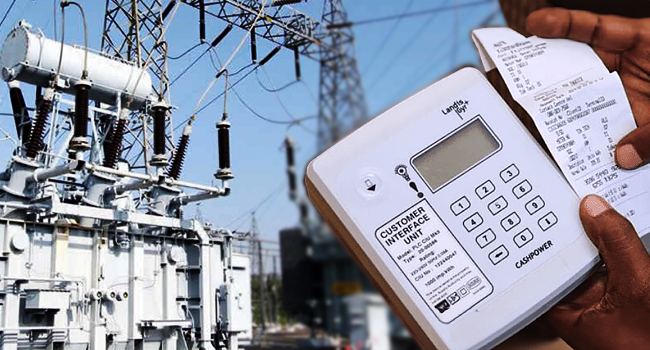
A major controversy is unfolding in Nigeria’s electricity sector after the Enugu State Electricity Regulatory Commission (EERC) slashed tariffs, drawing sharp criticism from the Nigerian Electricity Regulatory Commission (NERC) and other key power industry stakeholders.
The dispute began earlier this month when the EERC approved a significant reduction in electricity tariffs for Band A customers served by MainPower Electricity Distribution Limited (MEDL), the primary distribution company in Enugu State.
Under the new order, Order No. EERC/2025/003, the tariff was reduced from the national average of approximately ₦225/kWh to ₦160.40/kWh, while tariffs for customers in Bands B to E were frozen entirely.
According to EERC, the move was aimed at providing relief to residents and businesses amid rising economic hardship, energy inflation, and widespread public dissatisfaction with power service delivery.
The commission said the decision reflected the state government’s commitment to cushioning the impact of the cost of living crisis while promoting transparency and local control in electricity governance, as granted under the Electricity Act of 2023.
Persecondnews reports that the reduction has quickly ignited a regulatory storm.
The Enugu tariff order directly impacts grid-supplied power, which remains under federal control.
The Nigerian Electricity Regulatory Commission, in a strongly worded statement, clarified that while states have authority to regulate distribution within their borders, they do not have jurisdiction over electricity generated and transmitted via the national grid, which is governed by federal legislation and NERC licensing.
“States must holistically incorporate the wholesale costs of grid supply to their states without any qualification or deviation,” NERC stated.
The Commission warned that any sub-national tariff design that disregards national generation, transmission, and legacy financing costs poses a threat to the sustainability of the Nigerian Electricity Supply Industry (NESI).
Industry experts and stakeholders have expressed concern that the tariff cut by EERC may set a dangerous precedent.
A senior official at the Market Operator’s office, who spoke on condition of anonymity, warned that such unilateral reductions, if replicated by other state regulators, could cripple revenue recovery efforts and trigger market instability.
Similarly, the Association of Nigerian Electricity Distributors (ANED) noted that tariff uniformity across grid reliant areas is crucial for financial predictability and maintaining investor confidence in the power sector.
At the core of the debate is the subsidy component assumed by the Enugu tariff slash.
NERC pointed out that the ₦160.40/kWh figure was derived by reducing the average generation tariff from ₦112.60 to ₦45.75, effectively introducing a subsidy of ₦66.85 per kilowatt hour with no clear mechanism or funding plan for recovery.
NERC cited Section 34(1) of the Electricity Act, which tasks it with preserving efficient market structures and ensuring optimal resource utilization across the federation.
The Commission expressed concern that EERC’s approach, though well intentioned, could distort NESI’s financial ecosystem, especially since MEDL depends entirely on grid supply.
While acknowledging that the 2023 Electricity Act gives states the power to regulate local distribution, NERC emphasized that this must not conflict with federal oversight, especially where interconnected infrastructure and market wide obligations are concerned.
As of press time, NERC says it is engaging with EERC to address what it describes as misinterpretations of the Act and tariff setting powers.
However, the Commission has also made clear that any distortionary tariffs not aligned with cost reflective principles will trigger corrective action, which may include penalties or withdrawal of relevant approvals.
“The electricity market will be made whole in terms of cost recovery,” NERC concluded, reaffirming its statutory obligation to uphold market integrity.
This regulatory clash is the first major test of Nigeria’s post Electricity Act electricity framework, which sought to decentralize power governance.
Now, the Enugu tariff standoff is raising broader questions about how state and federal regulators will co exist and who ultimately pays the price when policy, politics, and power collide.










Leave a comment