










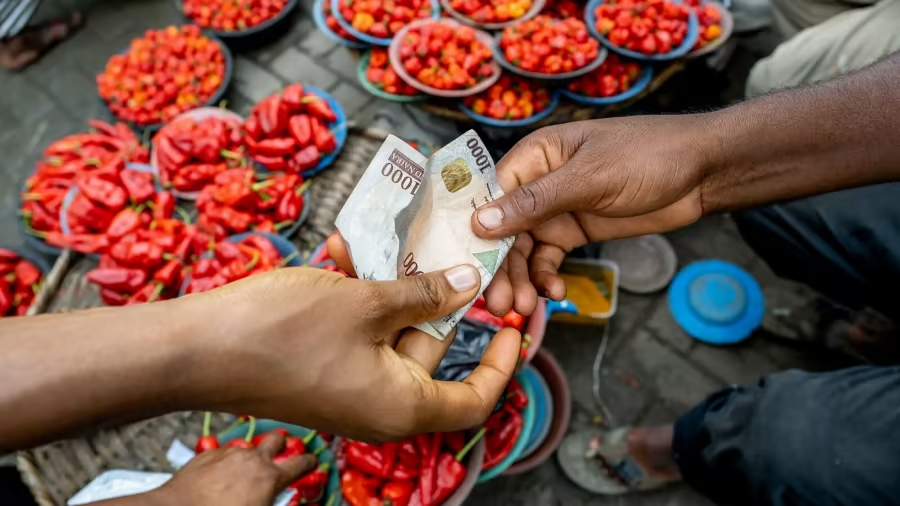



Nigeria’s inflation rate has risen to 34.6% in November, up from 33.8% in October, according to the National Bureau of Statistics (NBS).
The rate represents an increase of 0.72% compared to the October 2024 rate. On a year-on-year basis, the headline inflation rate was 6.40% points higher than the rate recorded in November 2023 (28.20%).
The food inflation rate in November 2024 was 39.93% on a year-on-year basis, an increase of 7% higher than the 32.84% rate recorded in November 2023.
“On a year-on-year basis, the headline inflation rate was 6.40% points higher than the rate recorded in November 2023 (28.20%),” the bureau said.
“Furthermore, on a month-on-month basis, the headline inflation rate in November 2024 was 2.638%, which was 0.002% points lower than the rate recorded in October 2024 (2.640%).
“This means that in November 2024, the rate of increase in the average price level is slightly lower than the rate of increase in the average price level in October 2024.”
The rise in food inflation was caused by increases in prices of items such as yam, guinea corn, maize grains, rice, and palm oil.
“The rise in food inflation on a year-on-year basis was caused by increases in prices of the following items; Yam, Water Yam, Coco Yam, etc (Potatoes, Yam & Other Tubers Class), Guinea Corn, Maize Grains, Rice, etc (Bread and Cere-als Class), Beer, Pinto (Tobacco Class), and Palm Oil, Vegetable Oil, etc (Oil and Fats Class),” NBS said.
On a state-by-state analysis, Bauchi, Kebbi, and Anambra recorded the highest food inflation rates in November, while Delta, Benue, and Katsina spent the lowest on food.
Yobe, Kebbi, and Anambra recorded the highest food inflation on a month-on-month analysis, while Adamawa, Osun, and Kogi recorded the slowest rise in food inflation.
The average annual rate of food inflation for the twelve months ending November 2024 was 38.67%, which was 11.58% points higher compared to the average annual rate of change recorded in November 2023 (27.09%).
Author









Leave a comment