











By By SIOBHÁN O’GRADY
For two years, the Nigerian military has claimed to have defeated Boko Haram, the Islamist militant group that has terrorized the country’s northeast since 2009. But even if the government has regained much of the territory once controlled by the group, the fight is far from over.
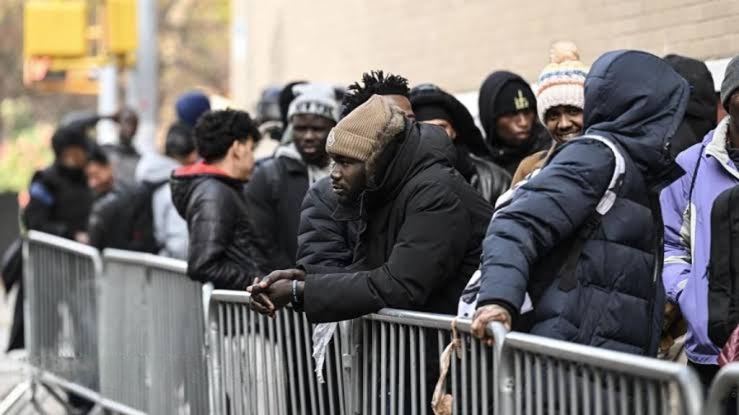
Close to 2 million people remain displaced in northeast Nigeria, civilian victims who have become highly vulnerable to the threat of regular suicide bombings, food insecurity and even exploitation by their own security forces.
A series of particularly deadly bombings in November and December killed dozens of people across the northeast. On Dec. 16, insurgents attacked an army convoy accompanying World Food Program-hired trucks in the northeastern state of Borno, the birthplace of Boko Haram. WFP spokesman George Fominyen said in an email that the convoy included 25 commercial trucks WFP had hired for transport, and that four people were killed, including one driver and his assistant. One truck was burnedand another was taken, he said.
Boko Haram has gained notoriety in part for its repeated practice of strapping bombs to young girls and sending them off to detonate in crowds. Elizabeth Pearson, a researcher at King’s College London, tracks female suicide bombings by Boko Haram. Through Dec. 12, she had recorded 83 such incidents this year. That’s a roughly twofold increase from the 37 incidents she tracked in 2016.
The attack on the WFP convoy came just days after the Nigerian government announced it would release $1 billion from an excess oil account to fight Boko Haram — a decision that runs contrary to the military’s narrative that the group was defeated long ago. The move has raised questions about what the money will be used for and whether or not it will even be put toward the crisis in the northeast at all. Many have expressed concerns over how releasing such an immense amount of money will open up possibilities for corruption, especially with the 2019 presidential elections looming.
“If the money will be channeled to the humanitarian situation … then it’s a welcome development,” said Idayat Hassan, director at the Abuja-based Center for Democracy and Development West Africa. “But if it’s basically just another fight in the military war, then it’s just a waste.”
In addition to the daily threat of violence, the conflict has set off an extensive humanitarian emergency. Recent data from the U.N. Office for the Coordination of Humanitarian Affairs shows that more than 5 million people are food insecure, and millions are suffering from acute malnutrition.
Now, as the government seeks to secure Borno State, it is planning to fortify certain towns and their immediate surrounding areas. This strategy has raised alarms that the government will essentially relinquish the remaining areas of the countryside to Boko Haram, forcing vulnerable civilians to decide between leaving their properties and livelihoods or staying in areas where the military is not going to protect them. There are also concerns that it will allow for Boko Haram to infiltrate some of these fortified towns.

“If people are primarily farmers or fishers, what will they actually be doing in those garrison towns?” Hassan said. “The opportunity to farm or fish will be taken away from them, so you’re not trying to end the insurgency and make them self-sufficient in the way people want.”
The past two years have proven that military might and money is not all it will take to defeat Boko Haram, which once controlled an area the size of Belgium. There is still a deep distrust of the government in northern Nigeria, an area that was left to fend largely for itself during Goodluck Jonathan’s former presidency, and which has seen less progress than it would like during President Muhammadu Buhari’s first term. The United Nations and Human Rights Watch have collected dozens of allegations from civilians who say they were sexually assaulted by Nigerian security forces, often in camps meant for people already displaced by violence in the region. Others have seen their family members locked up indefinitely after being accused of collaborating with Boko Haram.
In a conversation in a community of displaced people in northeast Nigeria in May, a woman named Amina said Boko Haram kidnapped her daughter and grandchildren in May 2016. When the military liberated them, the children showed up in the town where their grandmother was staying, but without their mother. They said the military falsely suspected the mother was a voluntary wife of a Boko Haram militant, and threw her into a makeshift prison in one of their barracks in Maiduguri. Her family hasn’t seen her since.
“We are afraid to go there, because if you want to go to the barracks, you have to have money to beg them,” Amina said. “But I have nothing. How can I ask for anything?”
Joe Siegle, director of research at the Africa Center for Strategic Studies in Washington, said that at least by committing $1 billion to fighting Boko Haram, the government is publicly acknowledging that there is much more to be done. But “it isn’t just a matter of coming in with a stronger military presence” because resources should also be focused on civilian engagement.
“What the government needs to be doing now is winning the trust of the local population,” he said. “That’s the real battle, the next chapter here … that’s where they’ve failed.”
O’Grady is a special correspondent.
Culled from Los Angeles Times








Leave a comment